Shigaraki - Ode to the Earth: Twelve Artists Exhibition II
Shigaraki -12 Potters Ceramic Art Exhibition Ⅱ

| Exhibition period Schedule |
May 7, 2021 (Fri) – May 13 (Thu) May 7 - May 13, 2021 |
| Gallery opening hours Opening Hours | May 7th (Fri) - 11th (Tue) Online exhibition (WEB only) Wednesday, May 12th 11:00-19:00 Thursday, May 13th, 11:00 AM - 5:00 PM We sincerely apologize, but during the period of business closures in accordance with the state of emergency declaration [May 7th (Fri) - 11th (Tue)], we will be holding an online exhibition exclusively on our website (*). The gallery will actually be open during the times listed above from Wednesday, May 12th to Thursday, May 13th. * For the web-exclusive online exhibition, we provide detailed information on the five works exhibited by each artist. We apologize for the inconvenience, but please check the "Currently Running Exhibitions" pages on our gallery's homepage. |
| Exhibiting artist Artist | Sumiko Aoki, Sarou Onishi, Tosei Okuda, Shusaku Kanzaki, Teppei Komaki, Yoshihiro Sako, Nozomi Shinohara, Rakusai Takahashi, Tomoko Takama, Takashi Tani, Aika Tsumori, Kazuya Furuya (in alphabetical order) |
| Introduction Introduction |
A message for "Shigaraki - The Ode to the Earth: Twelve Artists Exhibition II"
Now that I've reached the age of 70, I've started to think about my original intentions once again. In his work "Kakyo," which could be considered a treatise on the art of Noh theater, Zeami wrote, "Never forget your initial intentions regarding right and wrong. Never forget your initial intentions in each stage of life. Never forget your initial intentions in old age." "The initial resolve of right and wrong" refers to the initial resolve of one's inexperienced self, while "the initial resolve of different stages" refers to the initial resolve that develops at different ages. Now that I'm seventy, I can write a little more, but I no longer stay up all night writing like I used to. The body inevitably ages, whether you like it or not.
However, I am grateful that I still have work even at this age, and I am currently enjoying my "retirement life." Noh theater is uninteresting without flowers. Life is the same, which is why the "flower of the heart" is so important. It is said that Noh is not something to be seen with the naked eye, but with the mind's eye. I think this applies to all art forms. A life without flowers is boring, and the same is true for works of art.
Sumiko AokiShe says she loves Oribe and Kiseido ware. Even after moving from Nagoya to Shigaraki, that feeling hasn't changed. Aoki's paintings are abstract and improvisational, blending together the scenery, objects, events, and emotions he has seen throughout his life. This "Kiseto Vase" features abstract painting in the style of Oribe ware, with the crimson of red shell providing a nice accent, establishing Aoki's unique style.
Sarou OnishiHis "Shigaraki Nezumi Tea Bowl," as its name suggests, represents a "new" challenge for him. Instead of creating soil tailored to specific purposes, the natural characteristics of the soil are utilized by combining raw soils with various properties as they are. As a result, white clay, coarse clay, fine clay, dense clay, and iron content are mixed together in streaks, creating a unique texture that cannot be achieved with any single material. The inside of the teacup is coated with glaze to prevent water from leaking out.
Tosei OkudaI think that Okuda's Shigaraki tea bowls are probably based on the mountain tea bowls that he admires. After much trial and error, he must have arrived at this tea bowl as an expression of his way of life and his spirit. Okuda says he wants to return to his roots and create a tea bowl that only he can make, one with the dignified style of an ancient samurai. The phrase "to rise up with a single sword" seems to carry that kind of meaning.
Shusaku KanzakiHe says that while inheriting tradition, he doesn't aim to create something old-fashioned, but rather works that are relevant to the times, and that he wants to create works that will endure into the future as an artist. It was from this sentiment that the beautifully fiery Shigaraki water container was born. Zeami warns against becoming complacent with "the flower of the moment," because "the true flower" is what is truly important. It seems that Kanzaki's challenge in search of that "true flower" has already begun.
Teppei KomakiHe has pursued his own unique sculptural expression using a semi-underground kiln that replicates the ancient Shigaraki kilns, but when expressing himself, he uses geometric patterns. The town of Tarao in Shigaraki, where he currently lives, is the highest point in Shigaraki, and he says that when he looks out at the scenery from there every day, he sometimes finds himself thinking about "ancient times." The "Carbonized Geometric Pattern Pourer" is a dreamy work born from such aspirations.
Hiroshi SakoIn addition to his wood-fired kiln in Shigaraki, he also engages in carbonization firing in a wood-fired kiln once a year. The reason is that before coming to Shigaraki, I encountered Suzu ware from the Noto Peninsula. This particular "carbonized ridged tea bowl" features a bold variation in the ridged pattern, resulting in a uniquely crafted tea bowl. The solid form and the elegant, charred black color are what make this tea bowl so appealing.
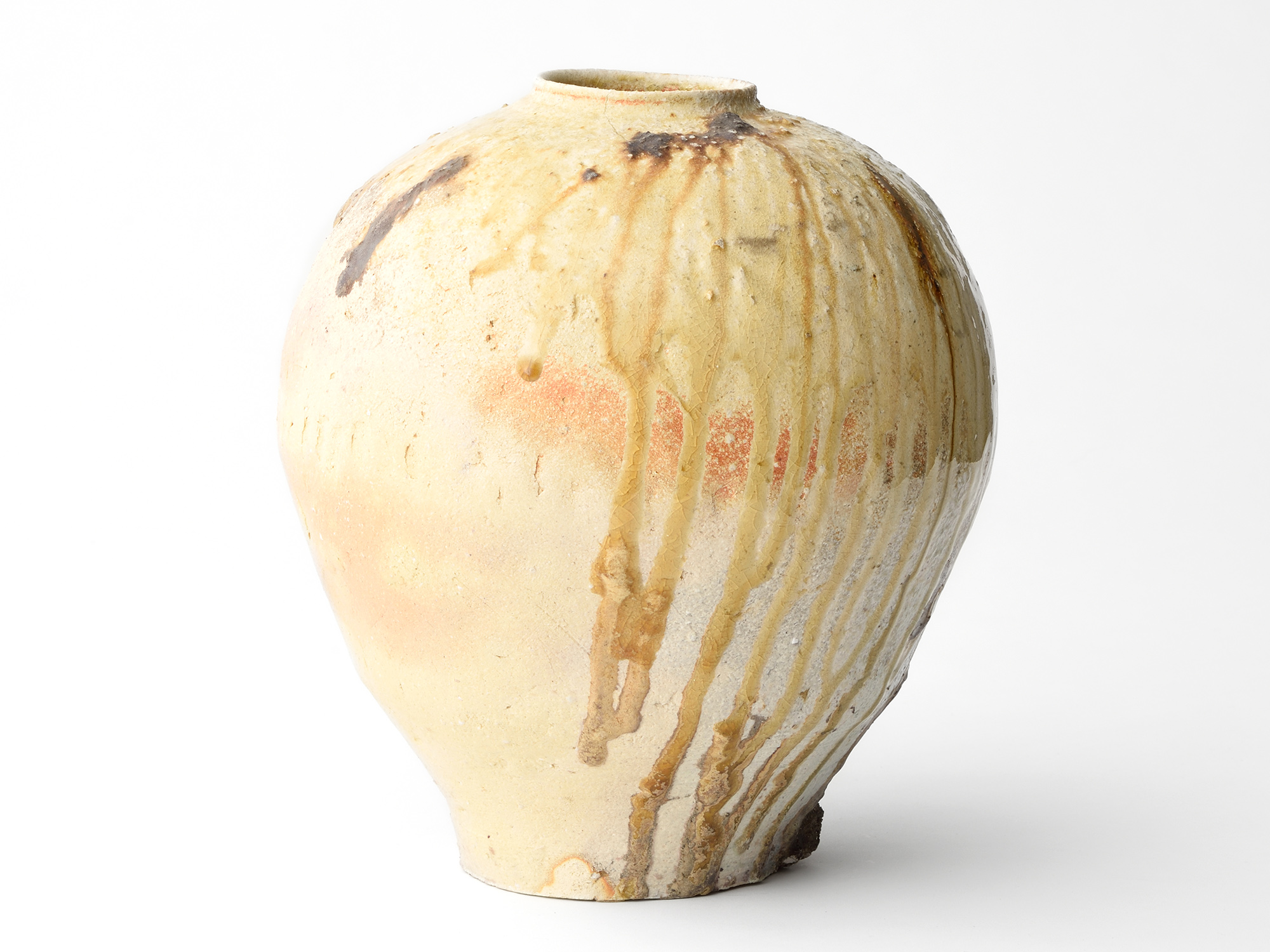
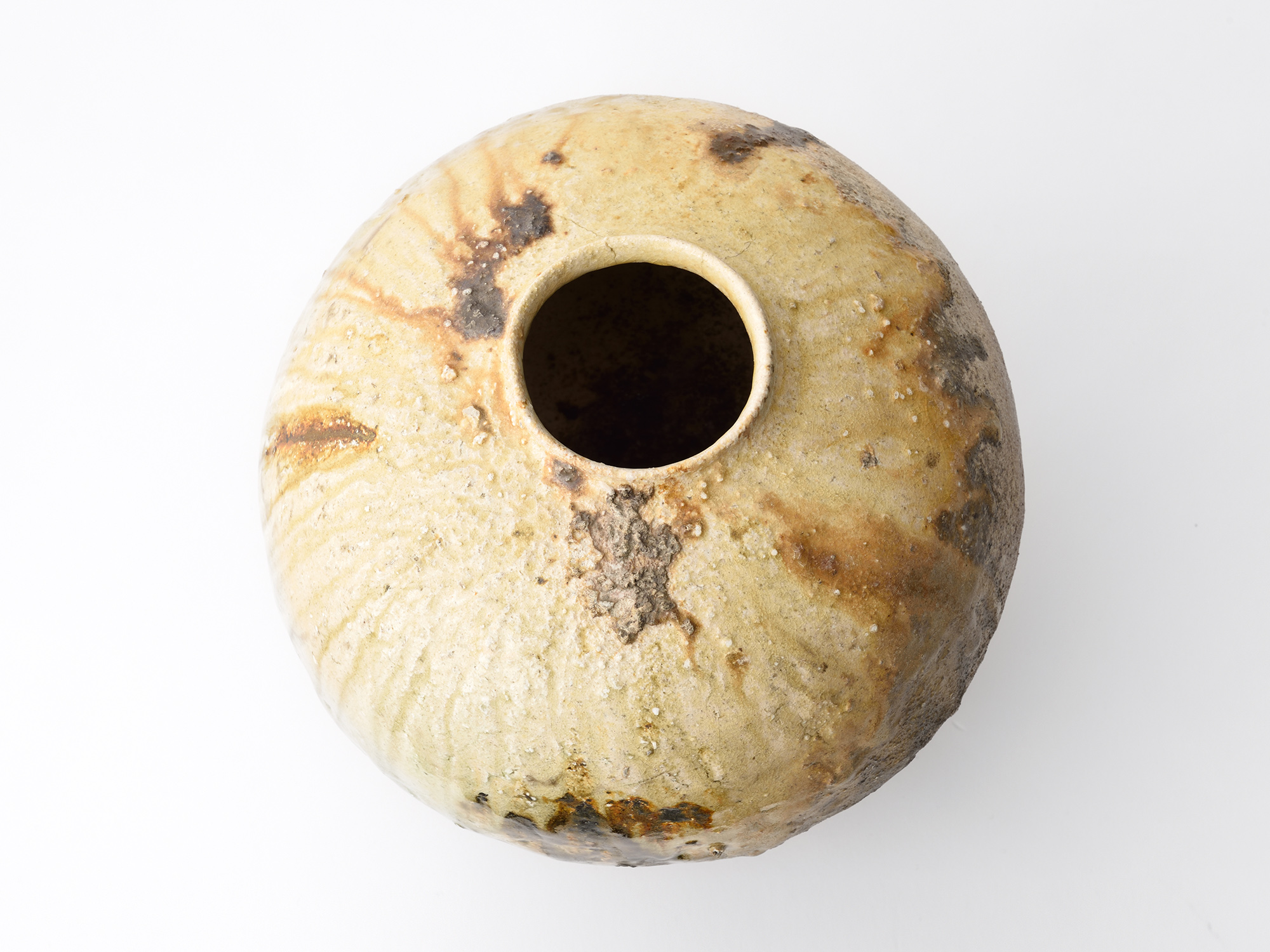
Nozomi ShinoharaAlthough the rim construction is different, I also exhibited a "Kiln-fired Jar" last time. This artist's work is characterized by its striking depictions of earth and ash melting together, as if biting into each other, based on the unglazed stoneware technique. Shinohara is relentlessly pursuing the fascinating qualities of Shigaraki's white, feldspar-containing clay and the potential of that clay. In contrast to the varied and expressive surface of this "Kiln-Fired Vase," the underside features a beautiful surface with numerous streaks of glaze flowing across a fiery, fire-colored texture.
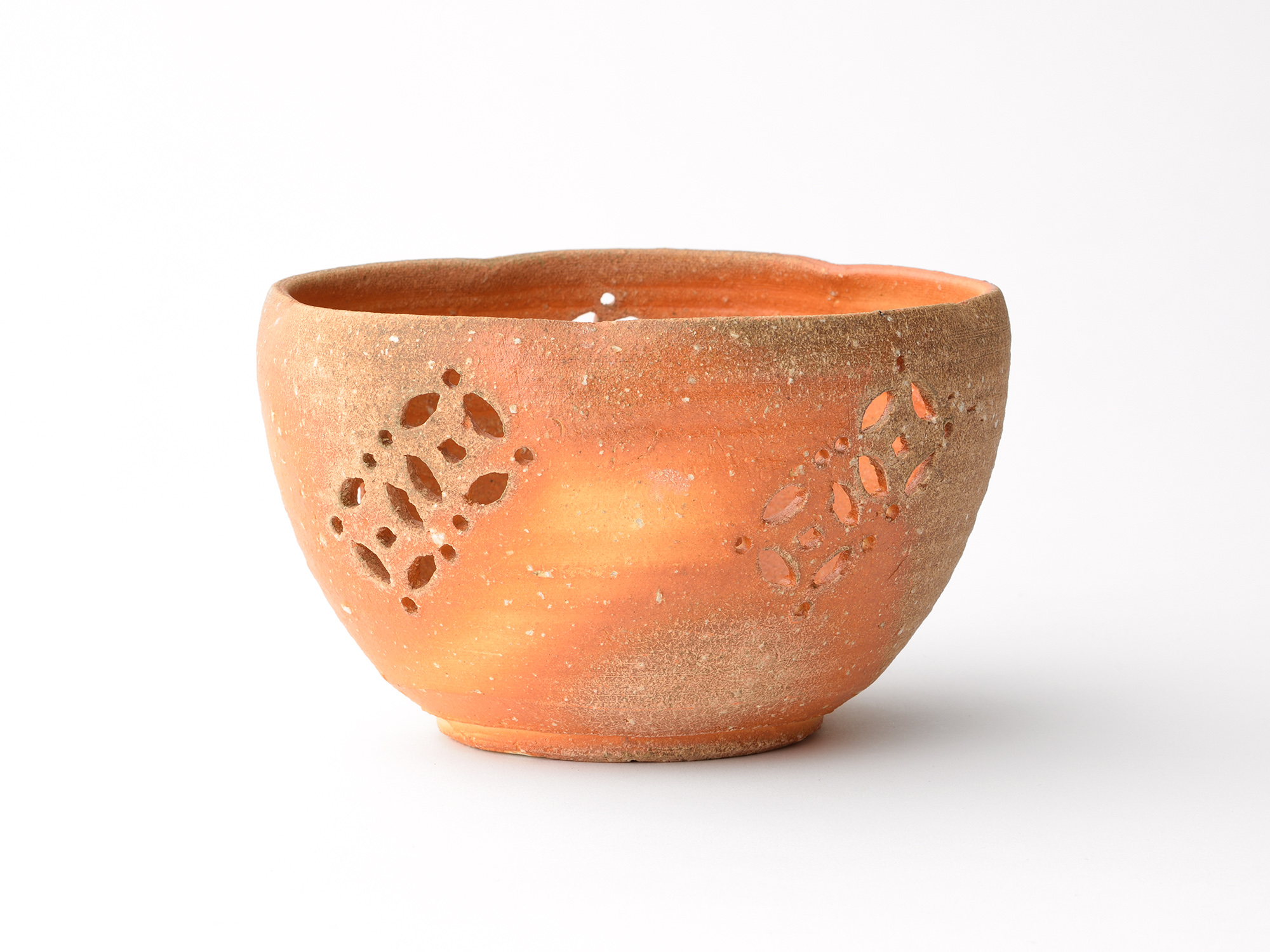
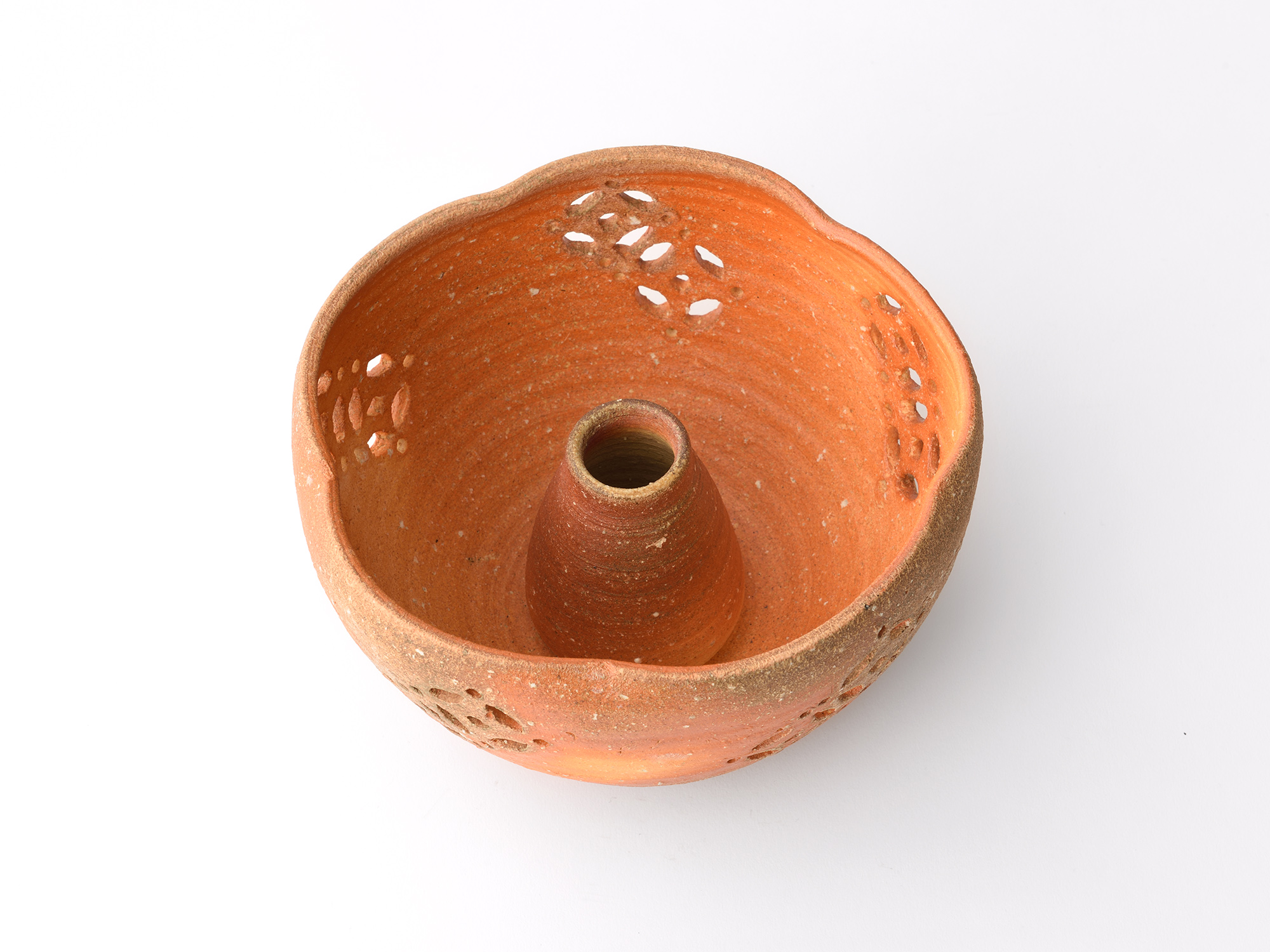
Takahashi RakusaiI think this "cloisonné openwork bowl" might be a gift from the god of fire. Even with careful calculation and kiln loading, it's rare to produce pieces with such elegant firing colors. It's not just luck; long experience and intuition are also crucial. This "Shippo Openwork Bowl" is inspired by a basket vase and comes with a small vase attached. Despite being a veteran, this is a fresh and new work.
Tomoko TakamaThese layered colored porcelain pieces are works that utilize a unique technique of layering many different colored clays and then carving out patterns. While his previous works featured relatively clear carvings, this "Layered Porcelain - Vase -" has ambiguous boundaries, and the artist says that as the accumulated memories and emotions fade, the thoughts, conversely, remain within him like layers of geological strata.
valleyThe "Shigaraki Tsukubai" is a white vase that breaks away from the conventional concept of Shigaraki pottery. Broadly speaking, the history of pottery may have been a development driven by the pursuit of white ceramics. Considering that, it's not surprising that there are white Shigaraki ware pieces. It's said that it's more important to try and learn from your mistakes than to regret not trying, so I want to warmly support Tani's bold challenge along with his friends.
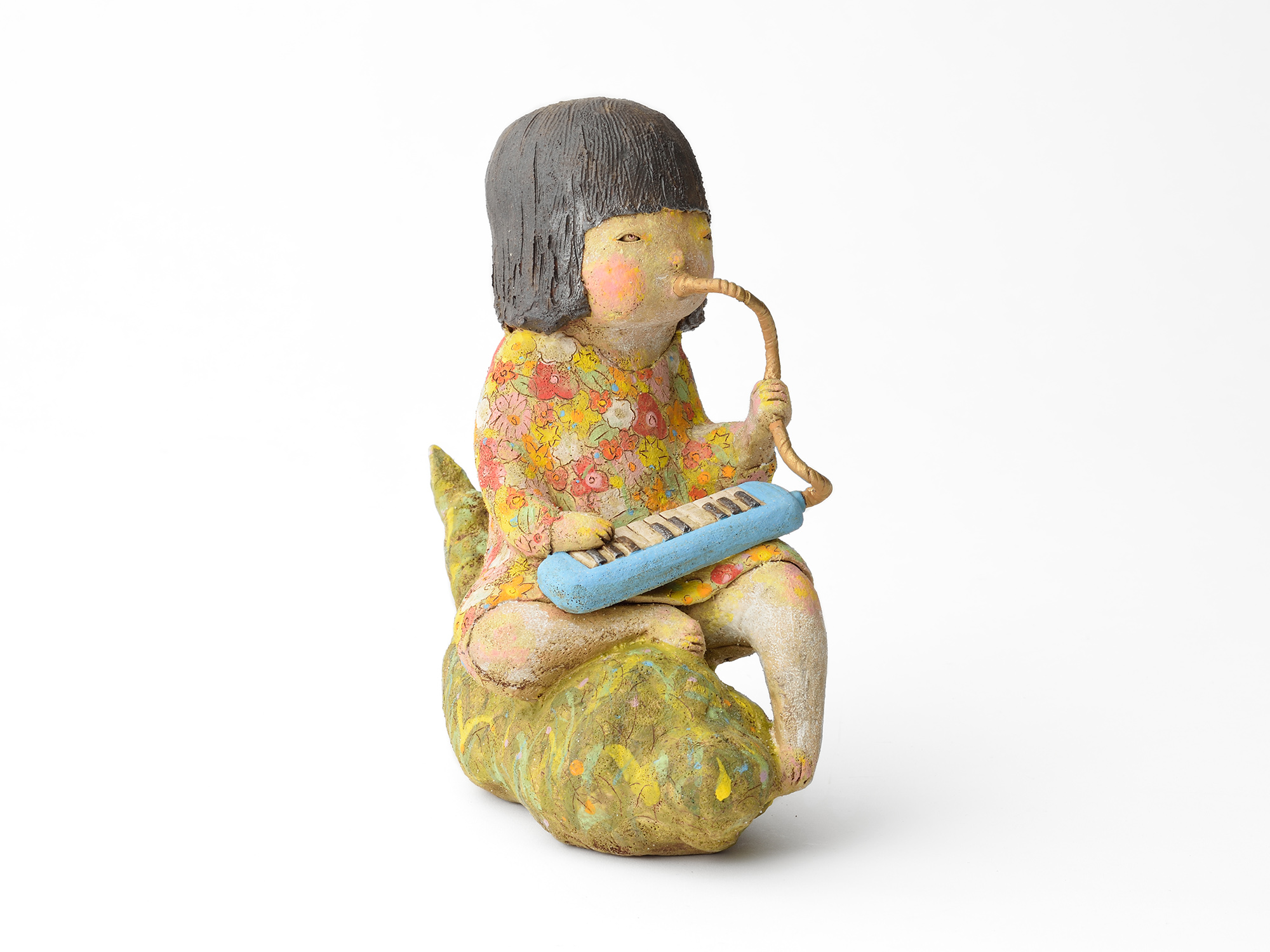
Aika TsumoriHer piece "Melodica Hiten" is based on the motif of celestial beings playing music in the clouds, and her beloved daughter, who will be starting elementary school in April, served as the model. For Tsumori, his beloved daughter must be like an angel. The artwork conveys the innocent and loving affection of Tsumori, the mother. This is a piece that only Tsumori could create at this stage in her life. Creating something is probably about building upon those present moments.
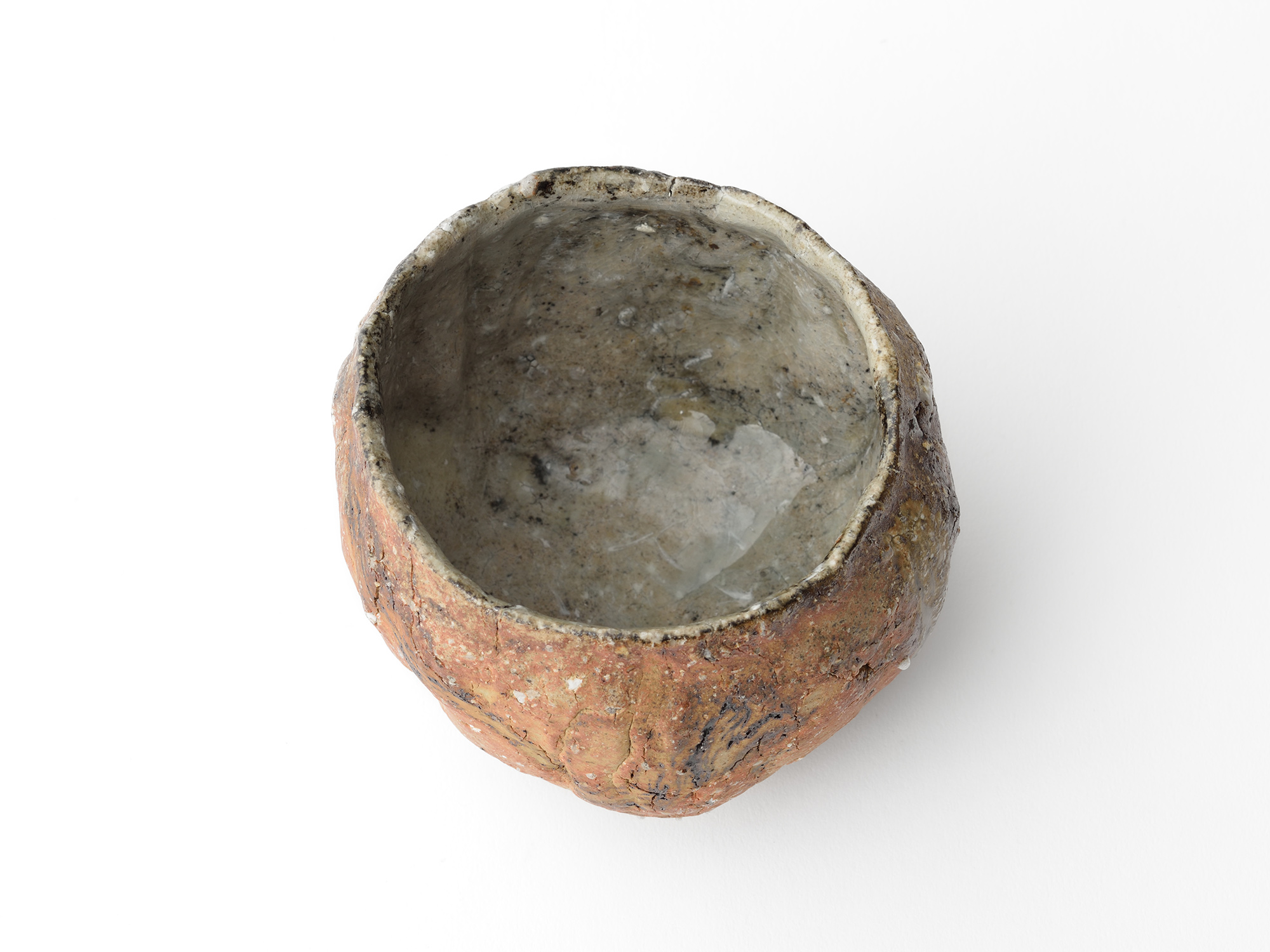
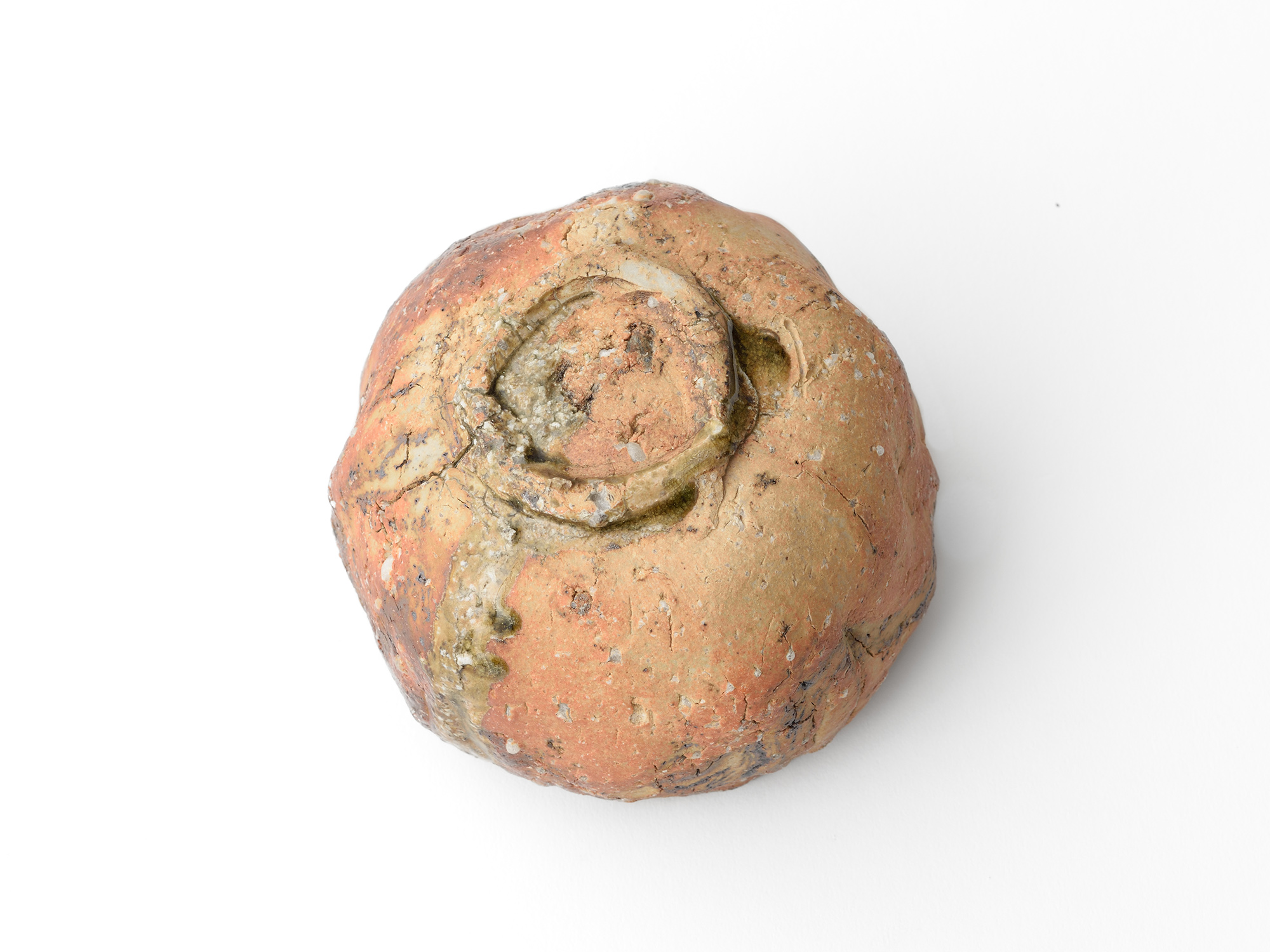
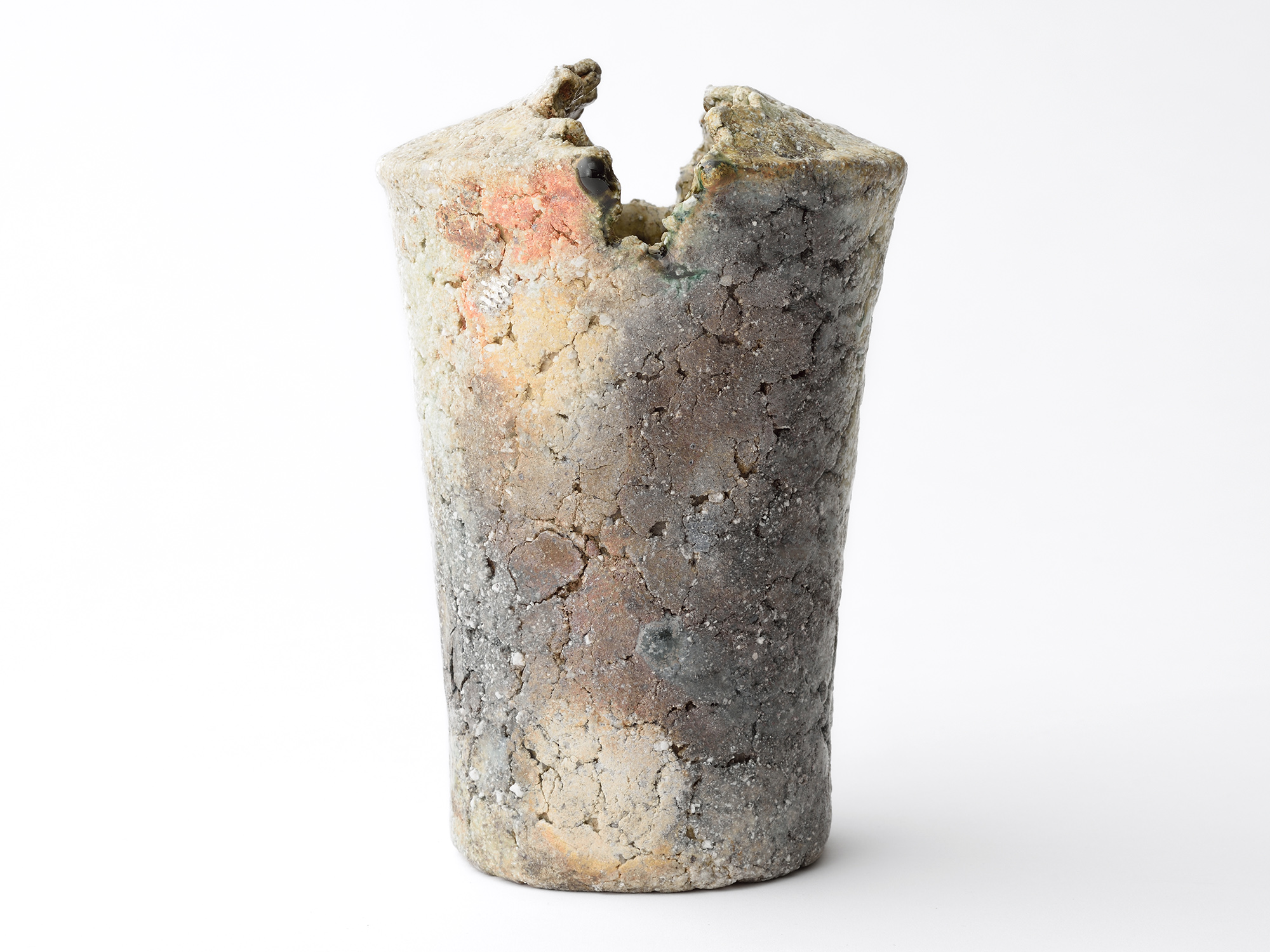
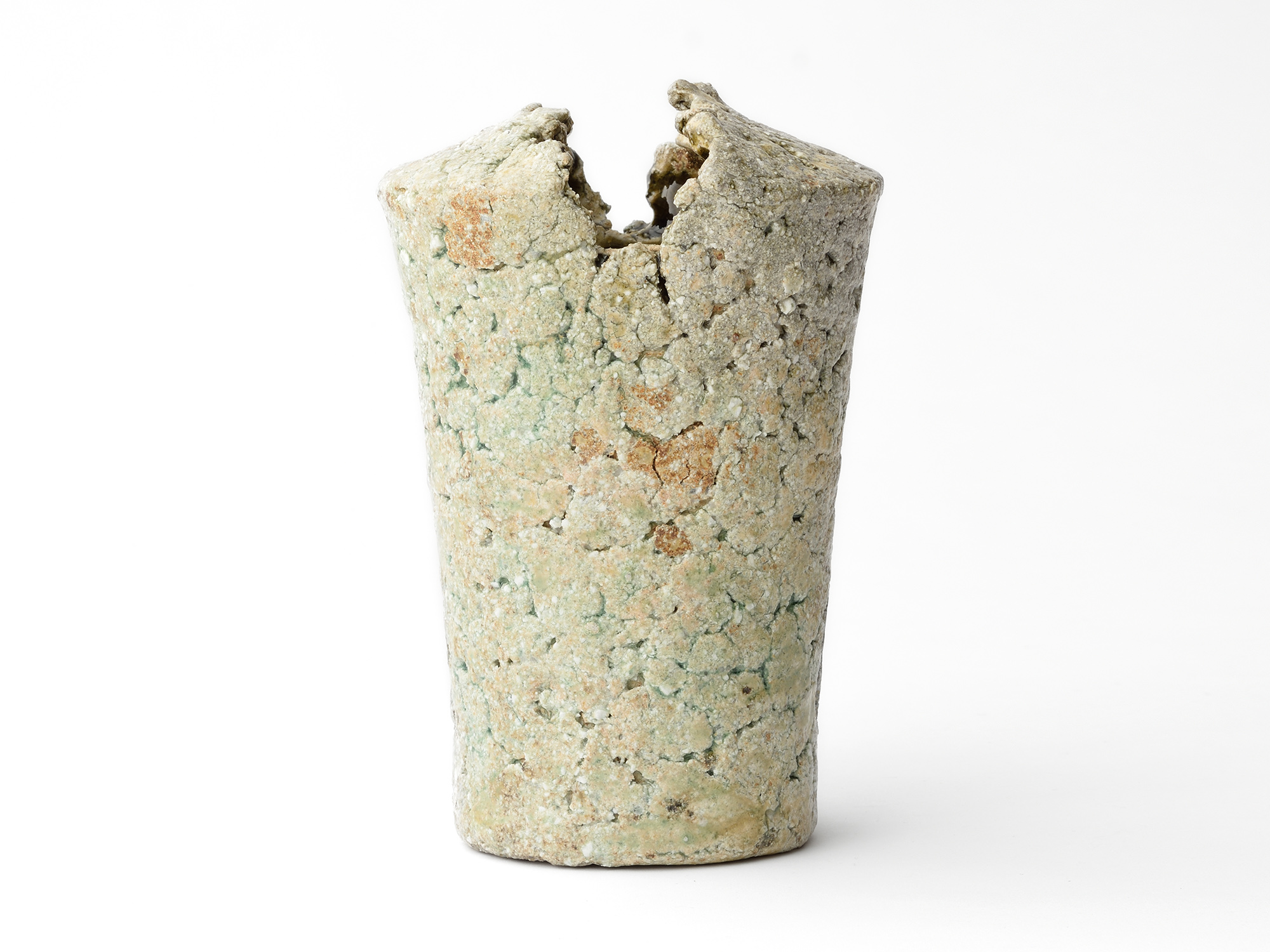
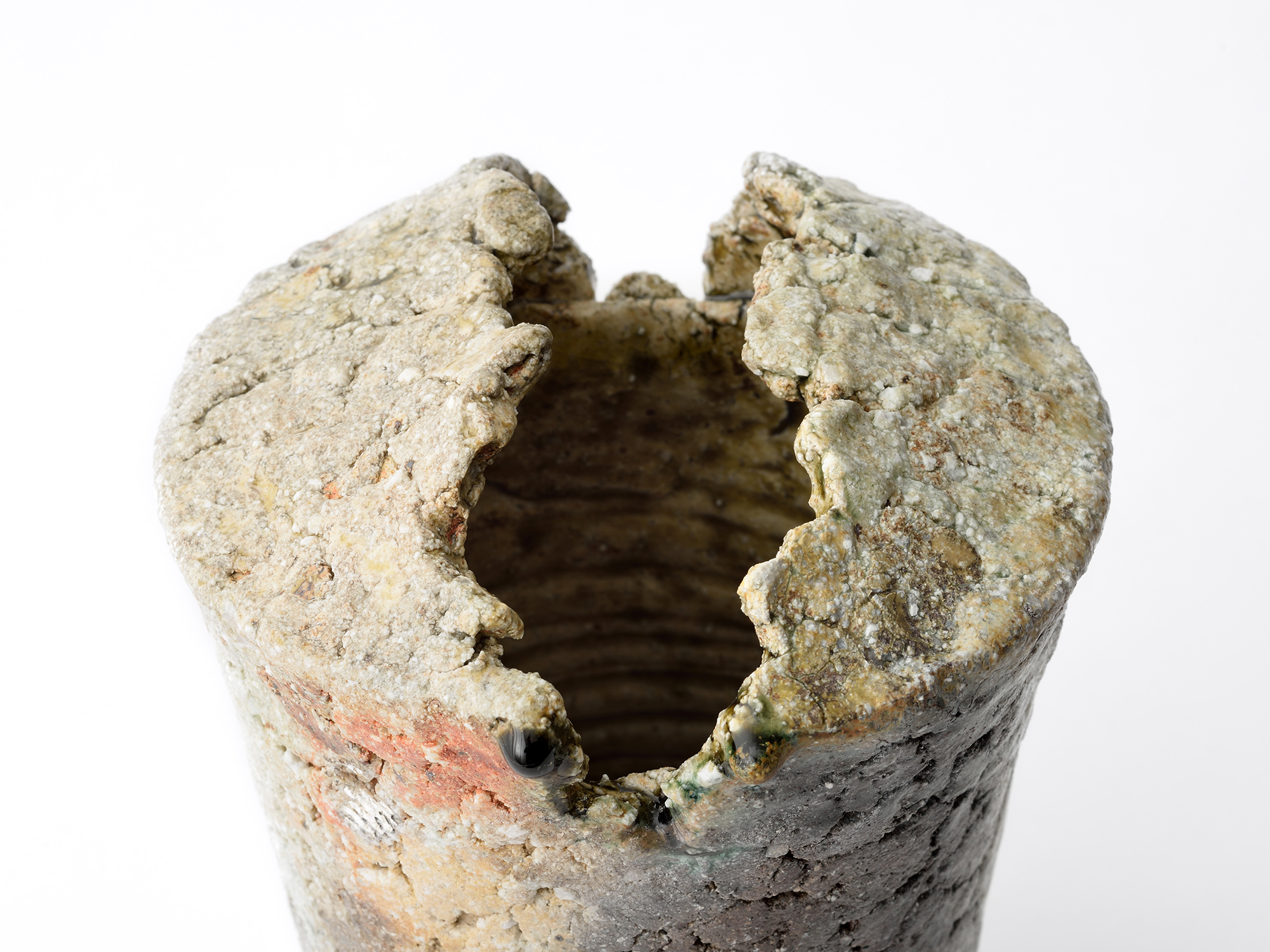
Kazuya FuruyaThere is a mysterious charm to his work. They say 99% of talent is hard work. It's that hard work that allows the remaining 1% of talent to shine. This Shigaraki mixed flower vase was formed by hand-molding, then the surface of the vessel was smoothed by applying raw clay, and fired. Its most striking feature is the boldly shaped rim. The cover of the direct mail (pictured above) shows a view of the flower vase from directly above. The pale green glaze applied to the inside is beautiful.
Koichi Mori (Art critic, Standing Director of the Japan Ceramic Society) |
| Biography Biography | ■ Sumiko Aoki Aoki Sumiko [I've been exploring empathy like a journey ever since I started making pottery.] Born in Nagoya City, Aichi Prefecture Completed graduate studies in Ceramics at Aichi Prefectural University of Fine Arts. In 1996, I began making pottery in Shigaraki. 1999: Selected for the Shigaraki Ceramic Art Exhibition. 2000: Built a kiln; selected for the International Craft Exhibition Itami. 2002: Selected for the International Ceramics Exhibition, Mino. Selected for the International Ceramics Exhibition Mino in 2008. 2013: Chozo Prize Ceramics Exhibition, Chozo Gold Prize (Grand Prix) 2014: 25th Shumei Cultural Foundation Award ■Sarou Onishi Onishi Satoki [Clay is a very fascinating material.] Sometimes it greatly disappoints expectations, and other times I find myself overjoyed to have obtained a treasure. I was worried and thinking about how to handle it. It can ignite a fighting spirit, lead you down a new path, and bring unexpected encounters. I think it's a once-in-a-lifetime encounter. Born in Shigaraki-cho, Shiga Prefecture in 1964. 1988: Graduated from Toyo University, Faculty of Sociology, Department of Applied Sociology. 1993: Graduated from Kyoto Prefectural Advanced Technical School for Ceramics, Department of Design. 2006: 17th Shumei Cultural Foundation Award 2007: Contemporary Ceramics Hagi Grand Prize Exhibition (Yamaguchi Prefectural Hagi Museum of Art) 2008: Grand Prize, 1st "Imadoki, Shigaraki, Kayariki" Exhibition 2013: Certified as a Shigaraki ware traditional craftsman (general category). 2018: Selected for the 11th Contemporary Tea Ceremony Ceramics Exhibition, and selected for the 3rd Japan Ceramic Society Encouragement Award Kansai Exhibition. ■Tosei Okuda Okuda Sueo [To rise with a single sword] Born in Shigaraki-cho, Shiga Prefecture in 1966. 1987: Completed the Molding Course at Kyoto Prefectural Ceramic Arts Vocational Training School. 1994 Solo exhibition at Gallery Touen (Shigaraki) 2006 Solo exhibition at Gallery Touen (Shigaraki) 2013 Solo exhibition at Gallery Touen (Shigaraki) 2018 Solo Exhibition at Gallery Yu (Shizuoka) 2019: 30th Shumei Cultural Foundation Award, Five Artists' Exhibition of Fine Pottery (Oribe, Nagoya) 2020: 30th Shumei Cultural Foundation Award Commemorative Exhibition (Gallery Toen, Shigaraki) In addition, I have exhibited in group exhibitions in various locations throughout the Kansai region. ■ Shusaku Kanzaki Kanzaki Shusaku [We inherit tradition, but we don't aim to be old-fashioned.] Works that are relevant to the times. Works created not as Shigaraki ware, but as the work of an artist. I want to create works that will endure in the present and into the future. Born in Shigaraki-cho, Shiga Prefecture in 1983. 2004: Graduated from Kyoto Prefectural Advanced Technical School for Ceramics. 2012: Selected for the 59th Japan Traditional Crafts Exhibition. 2013: Selected for the 60th Japan Traditional Crafts Exhibition. 2014 2nd Ceramics Exhibition Selected 2015: 44th Japan Traditional Crafts Kinki Exhibition, Newcomer Encouragement Award; 62nd Japan Traditional Crafts Exhibition, Selected for Exhibition. 2016: 27th Shumei Cultural Foundation Award 2017: Selected for the 5th Ceramics Exhibition 2018: Selected for the Hagi Grand Prize IV in Contemporary Ceramics, selected for the 65th Japan Traditional Crafts Exhibition, selected for the 3rd Japan Ceramic Society Encouragement Award Kansai Exhibition. 2020: Selected for the 67th Japan Traditional Crafts Exhibition. Regular Member of the Japan Crafts Association ■ Teppei Komaki Komaki Teppei [Geometric patterns are reproduced on unglazed stoneware, based on the theme of "recalling ancient times."] Born in Ibaraki Prefecture in 1971. 1994: Graduated from Kyoto Seika University, Department of Ceramics. Moved to Shigaraki and began working for a ceramics company. Solo exhibition at Takashimaya Kyoto Store's Art and Craft Salon in 2003 (and again in 2007). In 2005, he moved to Tarao in Shigaraki Town and became independent, and built his first anagama kiln. Selected for the Kinki Exhibition of Traditional Japanese Crafts in 2006; has been selected 12 times since. 2009: Runner-up at the 23rd Banko Ceramics Competition 2010: Selected for the 4th Contemporary Tea Ceramics Exhibition In 2011, he built his second semi-underground kiln, received the Newcomer Encouragement Award at the Kinki Exhibition of Traditional Japanese Crafts, and the 22nd Shumei Cultural Foundation Award. 2020: Received an Encouragement Award at the Toubi Exhibition (21 selections), and was selected for the 67th Japan Traditional Crafts Exhibition. ■Yoshihiro Sako Sako Yoshihiro [I was captivated by the way the white clay of Shigaraki changes color when exposed to the flames of a wood fire and emerges from the kiln, and that's why I came to Shigaraki. Along the way, I encountered Suzu ware on the Noto Peninsula, and now, in addition to my Shigaraki kiln, I also engage in charcoal firing in a wood-fired kiln once a year.] Born in 1971 in Miwa, Sakurai City, Nara Prefecture. In 1992, he became a disciple of Kiyoharu Tsuji and aspired to become a ceramic artist. 1995: Graduated from Ishikawa Prefectural Kutani Ware Technical Research Institute; trained in Shigaraki. Established in Shigaraki in 2000. 2009: Selected for the 56th Japan Traditional Crafts Exhibition. 2010 Anagama kiln construction 2015: Selected for the 62nd Japan Traditional Crafts Exhibition. 2017: Workshop at National Tainan University of the Arts, Taiwan; Selected for the 64th Japan Traditional Crafts Exhibition. 2018: 29th Shumei Cultural Foundation Award, 3rd Japan Ceramic Society Encouragement Award, Kansai Exhibition Encouragement Award. In 2020, selected for the 67th Japan Traditional Crafts Exhibition, and certified as a full member of the Japan Crafts Association. ■ Nozomi Shinohara Shinohara Nozomu [The fascinating qualities of Shigaraki's white, feldspar-rich clay.] Just how far can it be cooked? And I believe that this soil will produce colors I've never seen before. I'm fascinated by the vast potential of this soil. Born in Osaka Prefecture in 1972. 1991: Studied under Nobuo Furuya in Shigaraki. 1998: Completed the Glaze Department at the Shigaraki Ceramic Technology Research Institute. In 1999, established independent pottery studio in Kise, Shigaraki Town. In 2004, a new kiln was built in Iga. In 2007, he was certified as a Shigaraki ware traditional craftsman. 2012: 23rd Shumei Cultural Foundation Award 2014: Provided artwork assistance for the chapter in "Hyouge Mono" serialized in Kodansha's Morning magazine in which the character is introduced. 2017: Production in Haystack (MI) and Penland (NC), USA; Visit to Seagrove (NC). In 2019, I participated in workshops and train kiln firings at Stanford University and Utah State University. Selected for the Kinki Regional Exhibition of Traditional Japanese Crafts, and participated in numerous group exhibitions throughout Japan. ■ Rakusai Takahashi Takahashi Rakusai [When I'm taking pieces out of the kiln, sometimes I come across a piece that makes me think, "This is it." I tried firing it the same way in the next kiln, but it didn't work out. However, I believe this repetition is one of the things that makes this job interesting. Born in 1954 in Shigaraki-cho, Shiga Prefecture. 1975: Graduated from Shiga Prefectural Shigaraki Ceramic Research Institute In 1977, the Goyokai was formed under the guidance of Professor Toyozo Arakawa. 1992: Held solo exhibitions (9 times) at Kakiden Gallery. Since then, solo exhibitions have been held at Nihonbashi Mitsukoshi Main Store, Fukuoka Mitsukoshi, Osaka Takashimaya, JR Nagoya Takashimaya, Kyoto Takashimaya, and Yamaguchi Izutsuya. 2010: Succeeded to the name of Rakusai Takahashi V. 2021 "Living in Shigaraki: A Three-Person Exhibition by Rakusai Takahashi, Yoshiko Takahashi, and Akira Tao" (Kakiden Gallery) ■Tomoko Takama Takama Tomoko [Accumulating memories, fading memories] Emotions that accumulate, emotions that fade away Thoughts accumulate and then fade, leaving their form within me like layers of geological strata. The carved, almost peeling-away decorations on the vessel evoke an indescribable impulse and emotion. 2005: Completed Master's Program in Visual Arts, Graduate School of Art Production, Osaka University of Arts. Solo exhibition at the Craft Salon on the 6th floor of Kyoto Takashimaya in 2007 (also held in 2014, 2017, and 2020). 2011: Studio Artist at Shiga Prefectural Ceramic Art Forest; 2013: NEXT Gallery, 6th Floor, Osaka Takashimaya Department Store 2013: A Challenge to a New Era of Ceramics! Everything is Ceramics (Shiga Prefectural Ceramic Art Forest) 2014: Japan Traditional Crafts Kinki Exhibition Newcomer Encouragement Award, 25th Shumei Cultural Foundation Award 2017: Art Fair Tokyo 2017 (Tokyo International Forum), Glamorous Ceramics (Ginza Wako Hall) 2018: Selected for the 3rd Japan Ceramic Society Encouragement Award, Kansai Exhibition. Numerous other solo and group exhibitions. ■Tani Mu Tani Q There's nothing fancy about the feeling of "That looks delicious!" It will be one of the major indicators on a long journey. It feels like a vehicle to the future in my hand. To reconstruct the "consciousness" of Shigaraki Let's get a massage. Born in 1977 at the Tani Seiemon Kiln in Shigaraki, Shiga Prefecture. In 2007, a double-barreled anagama kiln, commonly seen in medieval Shigaraki, was constructed. 2012 Single chamber anagama kiln In 2014, a large Shigaraki vase was acquired by the Portland Art Museum (USA). 2015 Solo exhibition at Gallery @KCUA (Kyoto) as part of the "Rorororo" Future in Progress Project 2017 "The Future, the Way Forward - An Exhibition of 11 Emerging Artists in Art, Craft, and Design" (Kyoto Institute of Technology Museum of Art and Design) 2019: "Air" NOTA_SHOP (Shiga), "Hiiro" Kansui (Kyoto) 2020 "Japanese Ceramics in Action - Beyond the Difficulties" Mashiko Ceramic Art Museum (Tochigi) 2021 "No Man's Land - The Future of Ceramics, Beyond Unseen Horizons -" Hyogo Prefectural Museum of Ceramics (Hyogo) ■ Aika Tsumori Tsumori Aico [Apparently, the melodica is now called a keyboard harmonica. Heavenly music.] Born in Shiga Prefecture in 1979. Graduated from Kyoto City University of Arts in 2002; selected for the Asahi Ceramic Art Exhibition (and subsequently in 2003, 2005, and 2006). 2003: Newcomer Award at the Women's Ceramics Exhibition 2007: Chozo Prize Ceramic Art Biennale Encouragement Award 2011 Shiga Prefectural Ceramic Art Forest, Ceramic Art Museum Gallery "Aika Tsumori - A Slightly Cynical and Cheerful Group of Friends" 2015: 6th Kikuchi Biennale, Excellence Award 2017: Received the 2016 Heiwado Foundation Arts Encouragement Award, the 28th Shumei Cultural Foundation Award, and the 7th Kikuchi Biennale Excellence Award. 2018: 43rd Shiga Prefecture Cultural Encouragement Award ■ Kazuya Furuya Furutani Kazuya How can I express myself by borrowing the power of nature, such as earth and fire? I create my artwork in Shigaraki, the place where I was born and raised, while constantly questioning myself. I've always felt that my everyday life, and myself, are a part of nature. Born in Shigaraki-cho, Shiga Prefecture in 1976. 1998: Graduated from Kyoto Prefectural Ceramic Arts Technical School. Studied under my father, Michio Furuya. 2002 Anagama kiln construction In 2003, he was selected for the Kinki Exhibition of Traditional Japanese Crafts (and has been selected 10 times since), and held his first solo exhibition at Tobu Department Store in Ikebukuro (and has held solo exhibitions every other year since). 2009: Solo exhibition at Aso Art Gallery (solo exhibitions every other year thereafter) 2013: Solo exhibition at Nagoya Sakae Mitsukoshi (solo exhibitions held every other year thereafter) Solo exhibition at Osaka Takashimaya in 2014 (and every other year thereafter). 2015: 26th Shumei Cultural Foundation Award 2019 Japan Traditional Crafts Kinki Exhibition: Newcomer Encouragement Award *1 The comments below the artist's name (in English) are the artist's own words about their work as a "poem of clay" and Shigaraki ware. *2 The comments written below the titles of the works in the "Main Exhibited Works" section are the artists' own comments about their respective works. |
| Artist in the gallery day Date Artist in Gallery | Tosei Okuda: Wednesday, May 12th, around 2:00 PM - 7:00 PM; Thursday, May 13th, 11:00 AM - 5:00 PM Takahashi Rakusai: Wednesday, May 12th, around 2:00 PM - 7:00 PM; Thursday, May 13th, 11:00 AM - 5:00 PM * Due to the impact of the COVID-19 pandemic, we regret to inform you that the artist's presence at the gallery has been changed from the original schedule. |
| Exhibited works Exhibited Works | Tea bowls, water containers, tea utensils, flower vases, tea whisks, jars, objects, sake cups, sake bottles, sake pitchers, plates, side dishes |
| DM Direct Mail | This exhibitionDMSee(PDF) |
| Video of the exhibition Exhibition Scenery Video | |
| notice Notice | ■ Online sales methods We will start accepting orders by phone from 11:00 AM on the first day of the exhibition, Friday, May 7th, when the gallery opens. To maintain accuracy in the order of reception, we only accept reservations by phone; unfortunately, we cannot accept reservations by email or fax. From May 8th (Saturday), the second day of the event, we will also accept orders via email and fax. ・The artwork you have purchased will be temporarily held at our gallery until the paulownia wood box and other necessary preparations are complete. Once the paulownia wood box arrives and the artwork is ready for delivery, we will contact you again regarding payment and shipping methods. ・For customers who will be able to visit our gallery in person, payment can be made in cash or by credit card (VISA and Mastercard only) at the store.For customers receiving delivery, we kindly request that you make a bank transfer to our gallery's bank account (Sumitomo Mitsui Banking Corporation). Please note that during the online exhibition period of this exhibition, there will be no transfer fees to our gallery's account. ・We will deliver your order to your specified address via Japan Post's Yu-Pack service. Please note that for orders under 20,000 yen (including tax), a separate shipping fee will be charged. For orders of 20,000 yen or more (including tax), delivery is free throughout Japan. • If there are any works you would like to see that are not currently on display online on this website, please let us know. We will inquire with the artist about their availability. We look forward to receiving your inquiries. ■Possibility of changes to the event due to the COVID-19 pandemic [as of April 22] We regret to inform you that, given the current COVID-19 situation, if we are asked to further restrict business operations, we may have to change the exhibition period and hours, or in the worst-case scenario, hold the exhibition online only. We would appreciate your understanding. We apologize for the inconvenience, but we will be posting the latest information on this website, so we would appreciate it if you would check it regularly. ■Measures to prevent the spread of COVID-19 [as of April 22nd] To ensure that all visitors can enjoy their time at our gallery with greater peace of mind, we are implementing the following measures to prevent the spread of COVID-19. We appreciate your understanding and cooperation. 1. A request to our valued customers We have placed alcohol-based hand sanitizer at the entrance of our gallery and the building. We kindly ask that you disinfect your hands upon arrival. Please wear a mask when you go out. Currently, if you have a fever or are feeling unwell, we kindly ask that you refrain from visiting the gallery. If you have visited a doctor or taken medication for fever or a cold within the past two weeks, or if you have traveled abroad, we kindly ask that you refrain from visiting the gallery. To help reduce crowding in the store, we kindly ask that you visit in small groups whenever possible. We regret to inform you that, for the time being, we will be suspending the tea service, including gyokuro tea, which we previously offered to our customers during the COVID-19 pandemic. 2. What our gallery is working on We installed a high-performance ventilation system, "Lossnay" (manufactured by Mitsubishi Electric), in our gallery on January 6, 2021. This new, powerful ventilation system ensures that all the air in our gallery is replaced every 15 to 20 minutes. In addition, the entrance door is kept open at all times to ensure even better ventilation. We have installed a new carbon dioxide concentration meter on the counter, effective April 2nd. Generally, our gallery's carbon dioxide meter shows readings of 450-550 ppm (the average carbon dioxide concentration indoors is approximately 1,000 ppm), so please rest assured and enjoy your time at our gallery. • For hand sanitizing, we use disinfectant solution from Shiseido. It contains moisturizing ingredients that are gentle on the hands, and has been well-received by our customers. We will further strengthen our daily cleaning procedures. We regularly disinfect with alcohol on frequently touched surfaces such as elevator buttons, tables and chairs, entrance door and toilet handles, brushes and pens, even during business hours. If our gallery becomes crowded with many visitors and we determine that it is becoming too close to the public, we may ask you to limit entry to the gallery. Our gallery staff will wear masks, undergo temperature checks and health monitoring, and thoroughly disinfect their hands with alcohol while serving customers. On March 30, 2021, all staff members underwent PCR testing (at Nishitan Clinic), and all tested negative. We will continue to conduct PCR tests throughout the year. We sincerely look forward to your visit to our gallery. |
| Main exhibited works Main Exhibited Works |
|


No.1
| Author name | Sumiko Aoki |
| Work name | Kiseto no Tsubo The tall, hand-formed vase has been given a shape and painting that evokes a sense of mystery, as if it were from an unknown place. I hope that whoever sees this, somewhere, will find it both nostalgic and new. |
| price | 170,000 yen (excluding tax) (187,000 yen including tax) |
| box | No box |
| size | W 18.5 × D 18.5 × H 40.0(㎝) |

No.2Sold Out
| Author name | Sarou Onishi |
| Work name | Shigaraki ware, Nezumi-nezu tea bowl, inscribed "Atarashinaru" (New). The Eda district of Shigaraki town, where this clay was produced, has been a place where clay has been mined since ancient times, and even now, many clay companies are located there. I heard that clay was being excavated at a construction site, so I was allowed to dig. The layers were thin, and red clay, white clay, and coarse sand were mixed in in streaks. I tried kneading it and making various things, but they were rough, didn't fire properly, leaked water, and all I could make were completely uninteresting. I almost gave up, but the texture of the sliced excavated clay was beautiful, so I tried to incorporate this texture into my work by hollowing out and carving the clay lumps. What I ended up with was slicing together clay lumps with various textures. It is what is called the tatara method, but although tatara is usually used to achieve uniformity in the clay, I deliberately did not knead it in order to take advantage of the natural beauty of the patterns that cannot be achieved by human hands. The texture is a product of chance, but this appearance is exactly as it was when the clay was formed about 2.5 million years ago. I wanted to show this appearance, so I started making tea bowls. Hard, soft, coarse, dense, clay, sand—I shaped the clay by hand, feeling my way through it to confirm its characteristics. When fired in the anagama kiln, the crimson color and the shading of the patterns came out naturally, but as expected, it was coarse and leaked. I applied glaze to the inside, filled the cracks, and tried to stop the leaks, repeatedly firing it in a kerosene kiln. As the clay and glaze intertwined and melted together, I truly experienced the fascinating process of firing pottery. For me, this clay was a once-in-a-lifetime encounter, a new discovery. After firing in the anagama kiln, several cracks were found. Normally, this would be considered a failure, but this was anticipated, and the piece will be finished from here. Ash glaze was packed into the cracks, and the piece was fired in a kerosene kiln at an angle, taking into account the flow of the glaze to ensure the cracks were filled. This resulted in a more interesting appearance around the foot than anticipated. This piece has a attached foot, but I think the glaze has helped to make the unnatural appearance look more natural. In the photo, you can see a scene that looks like a dragon ascending in the spot I chose for the front. I've come to think of this as a work where chance and intention strangely aligned. |
| price | 70,000 yen (excluding tax) (77,000 yen including tax) |
| box | Comes with a paulownia wood box (to be delivered later) |
| size | W 11.9 × D 11.3 × H 9.5(㎝) |

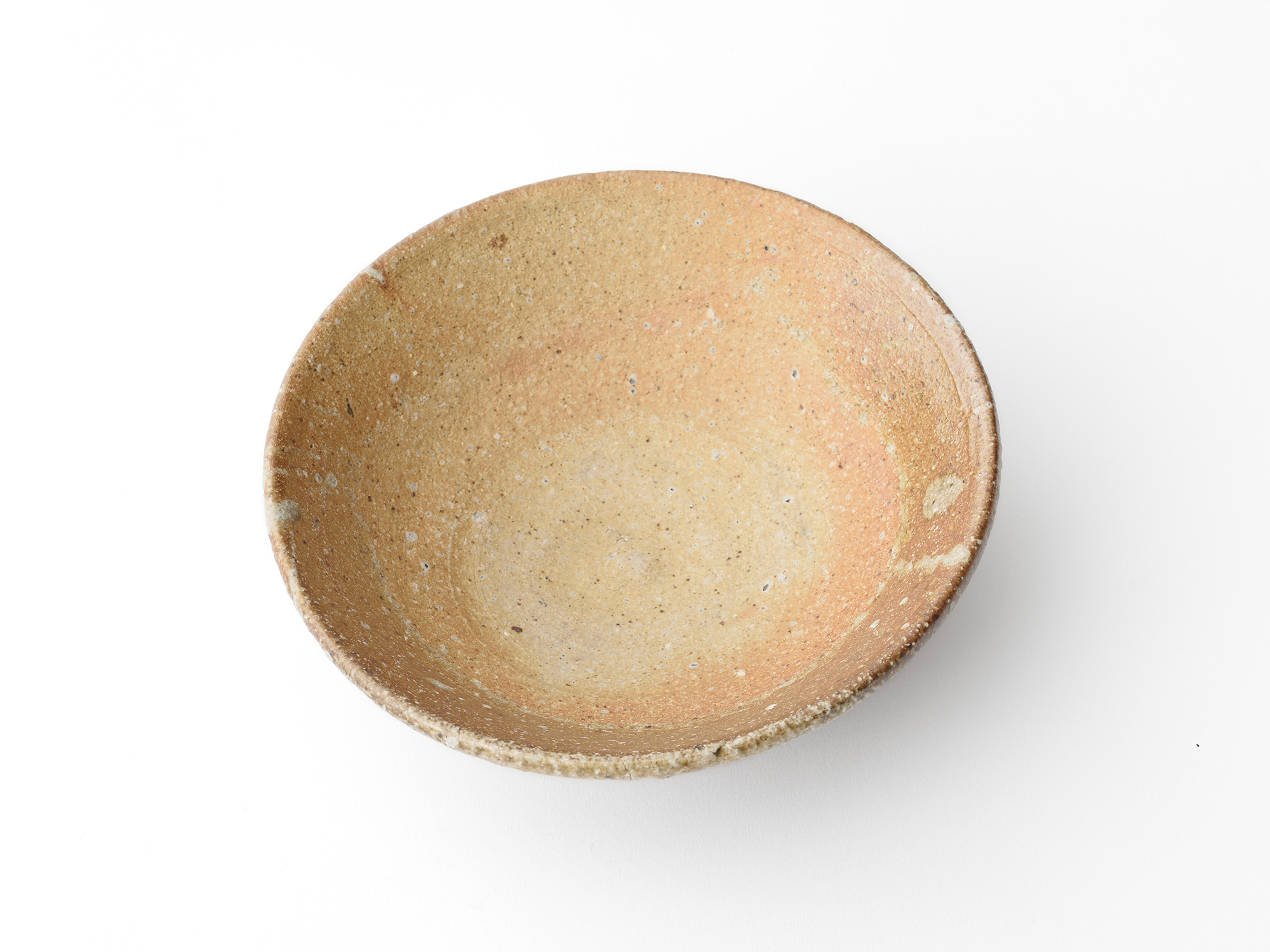

No.3
| Author name | Tosei Okuda |
| Work name | Shigaraki tea bowl He rises, wielding a single sword. |
| price | 90,000 yen (excluding tax) (99,000 yen including tax) |
| box | Comes with a paulownia wood box (to be delivered later) |
| size | W 17.0 × D 16.7 × H 6.5(㎝) |
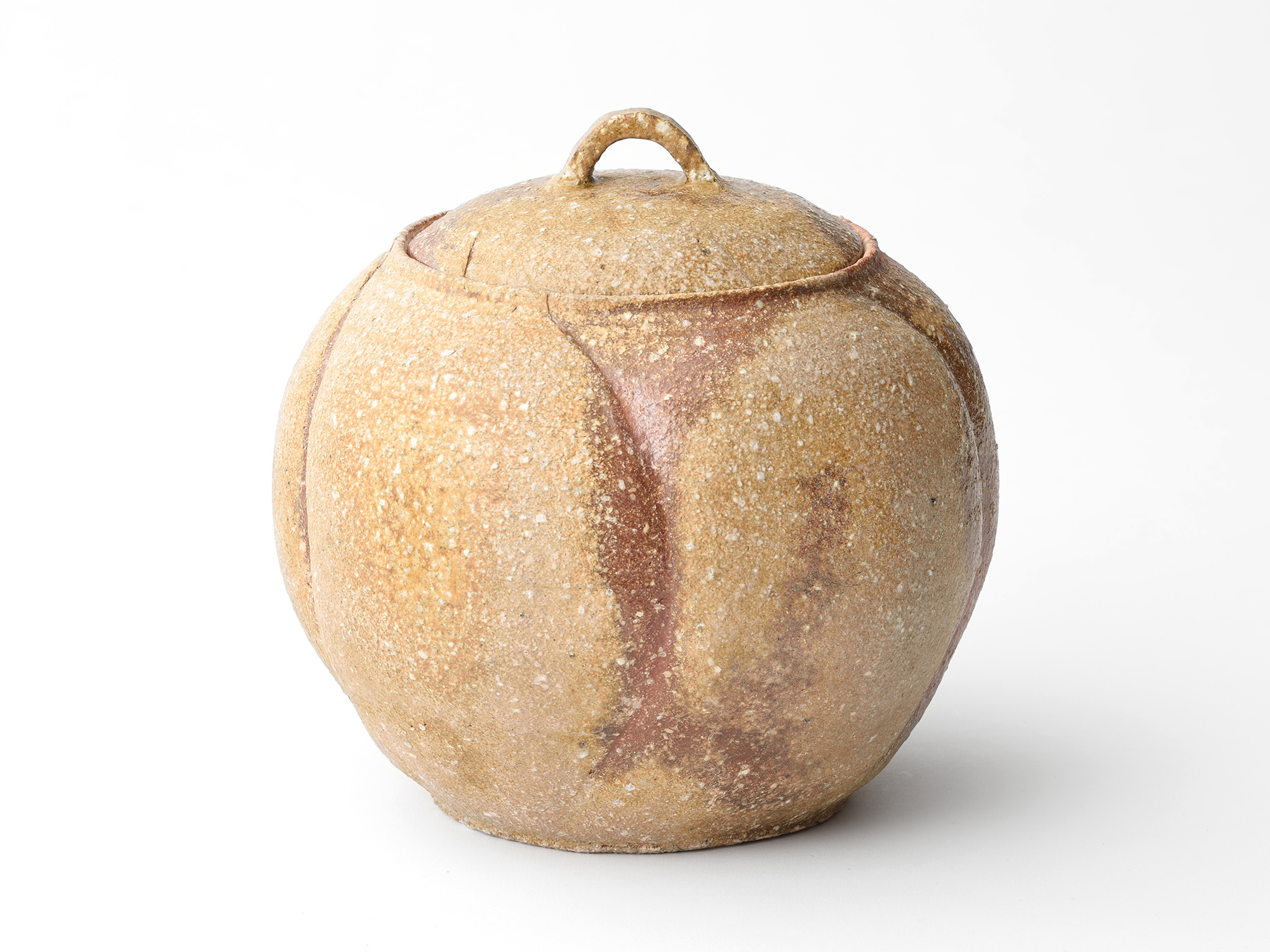

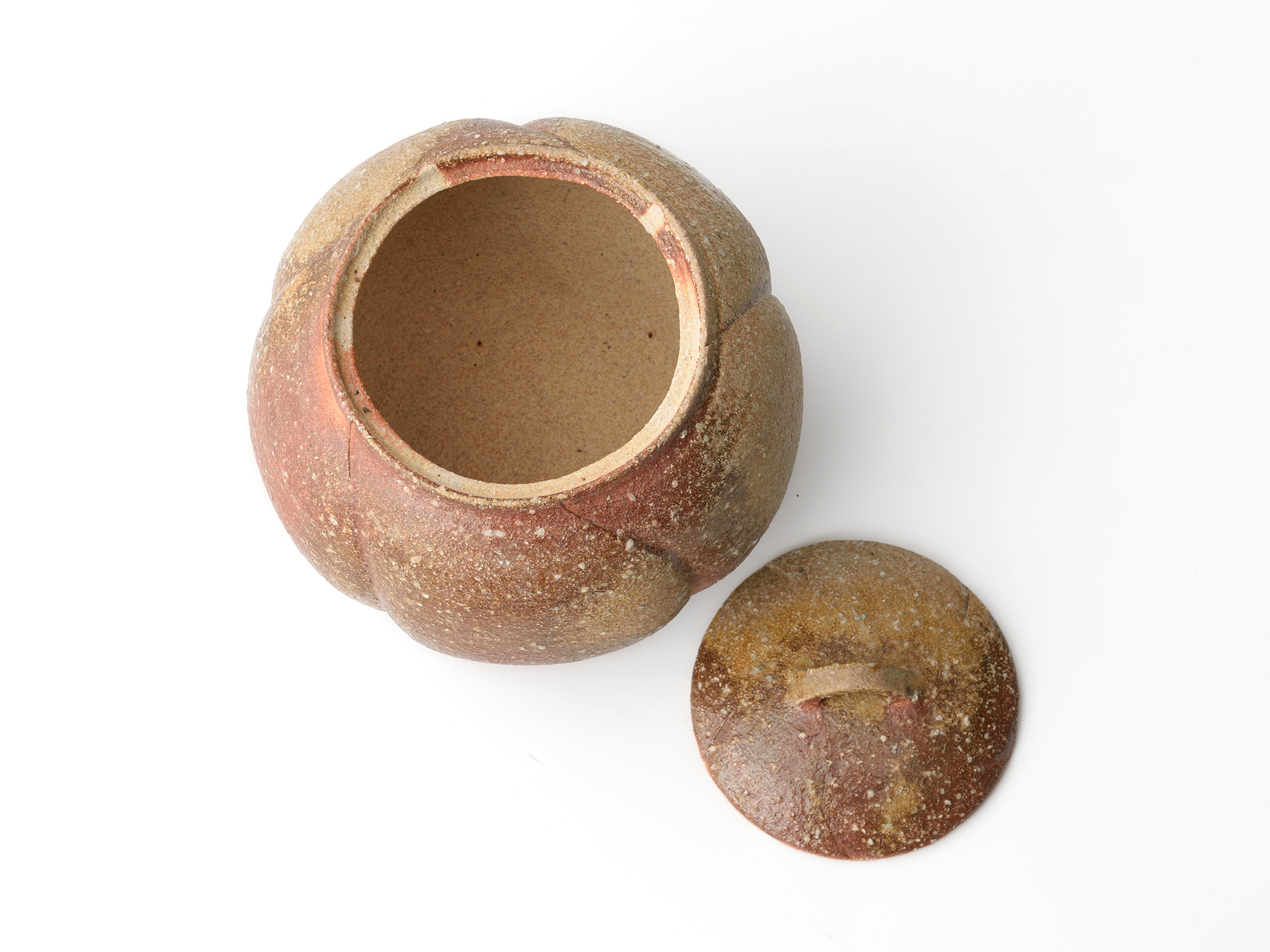
No.4Sold Out
| Author name | Shusaku Kanzaki |
| Work name | Shigaraki water container |
| price | 50,000 yen (excluding tax) (55,000 yen including tax) |
| box | Comes with a paulownia wood box (to be delivered later) |
| size | W 20.0 × D 20.0 × H 17.5(㎝) |
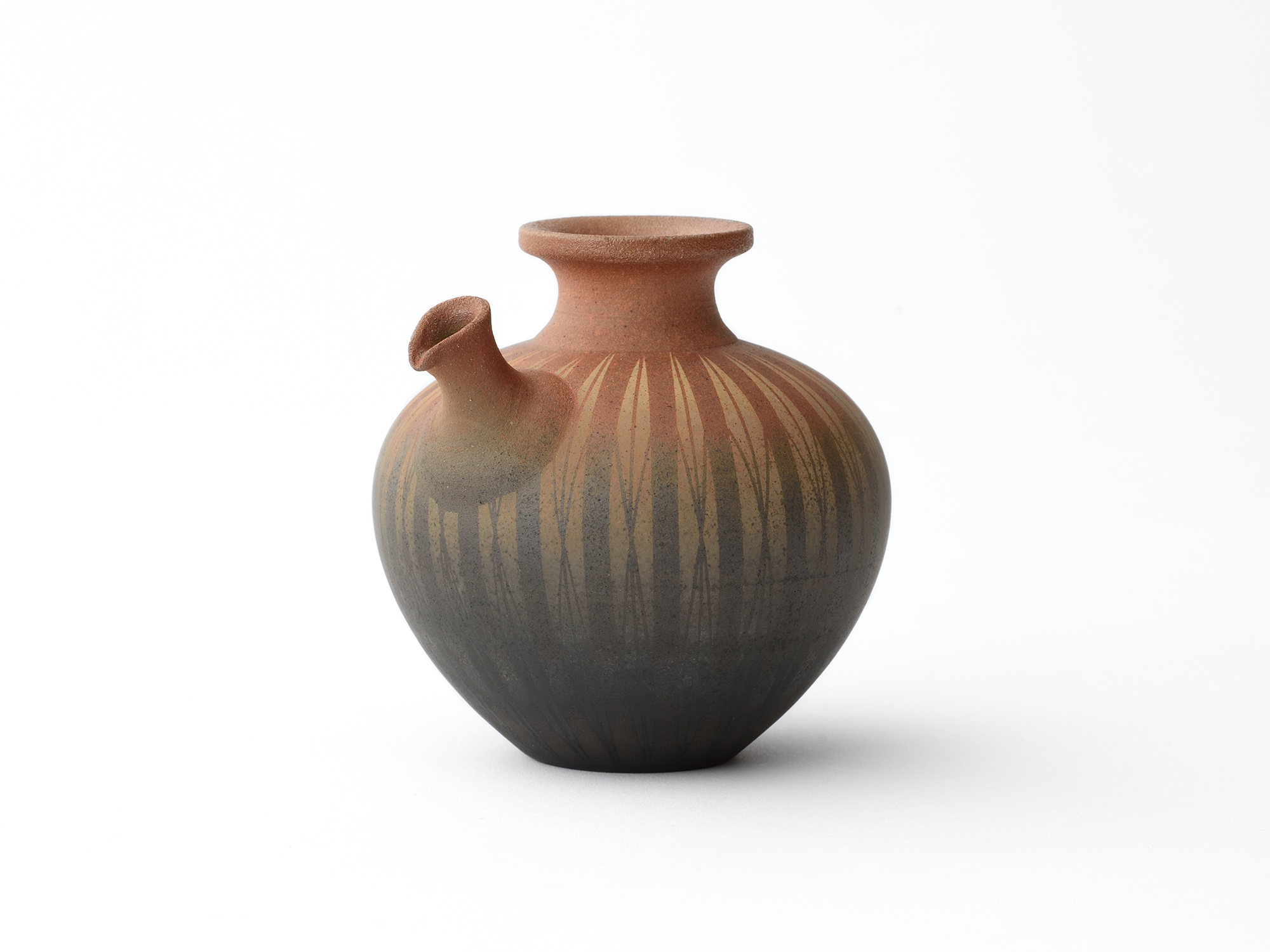
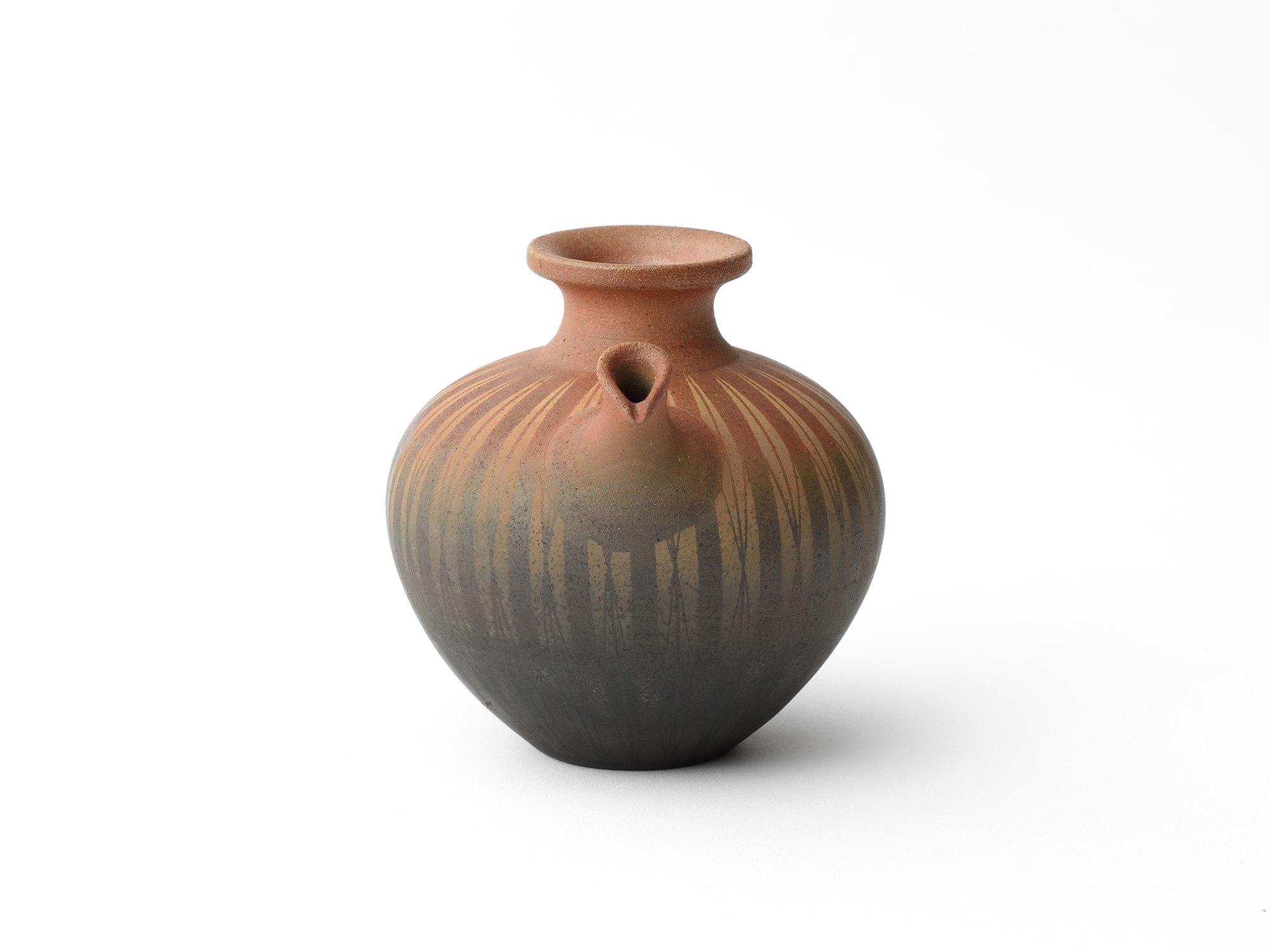
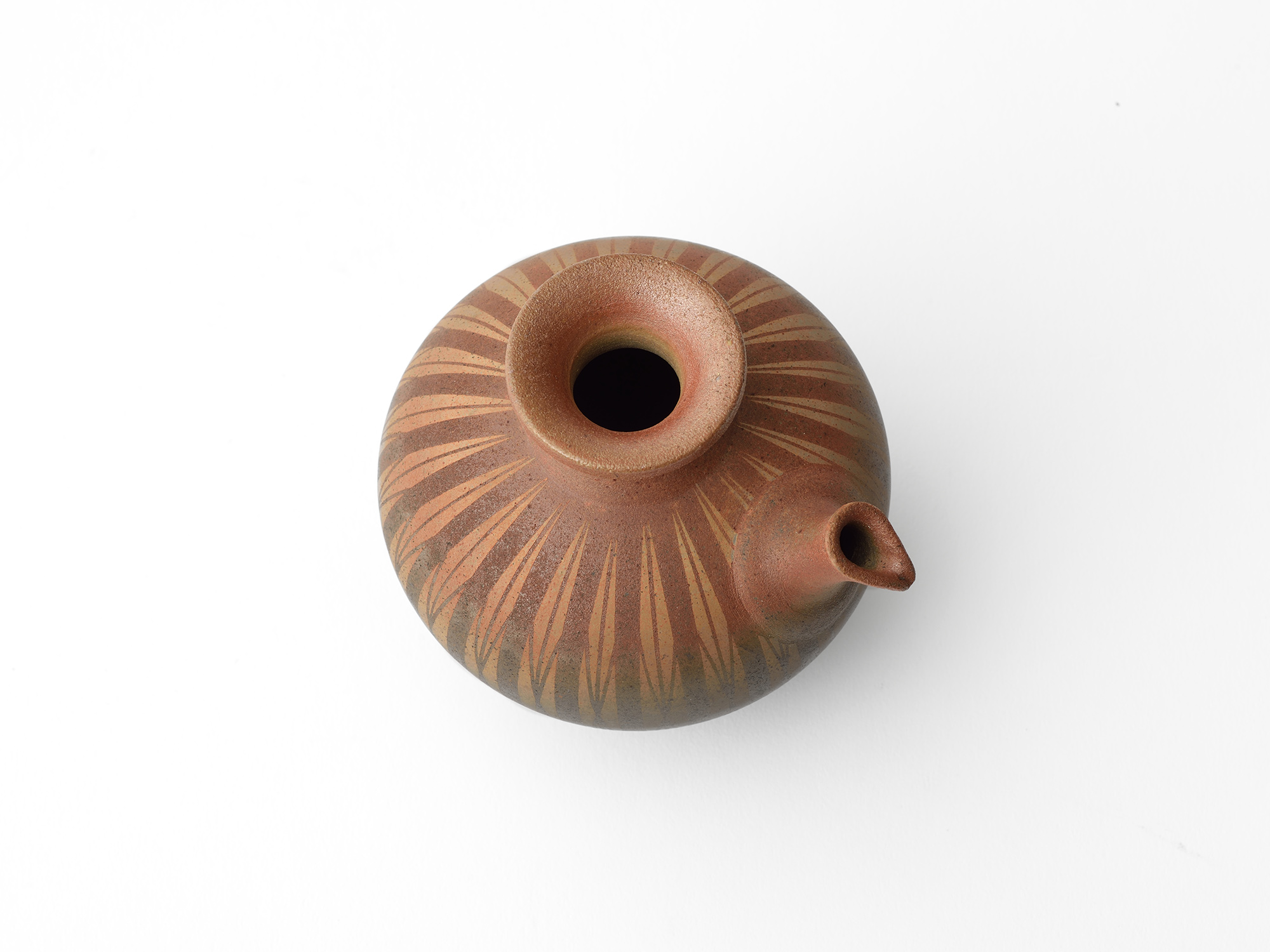
No.5
| Author name | Teppei Komaki |
| Work name | Carbonized geometric pattern ordering device |
| price | 24,000 yen (excluding tax) (26,400 yen including tax) |
| box | Comes with a paulownia wood box (to be delivered later) |
| size | W 11.5 × D 10.2 × H 10.5(㎝) |
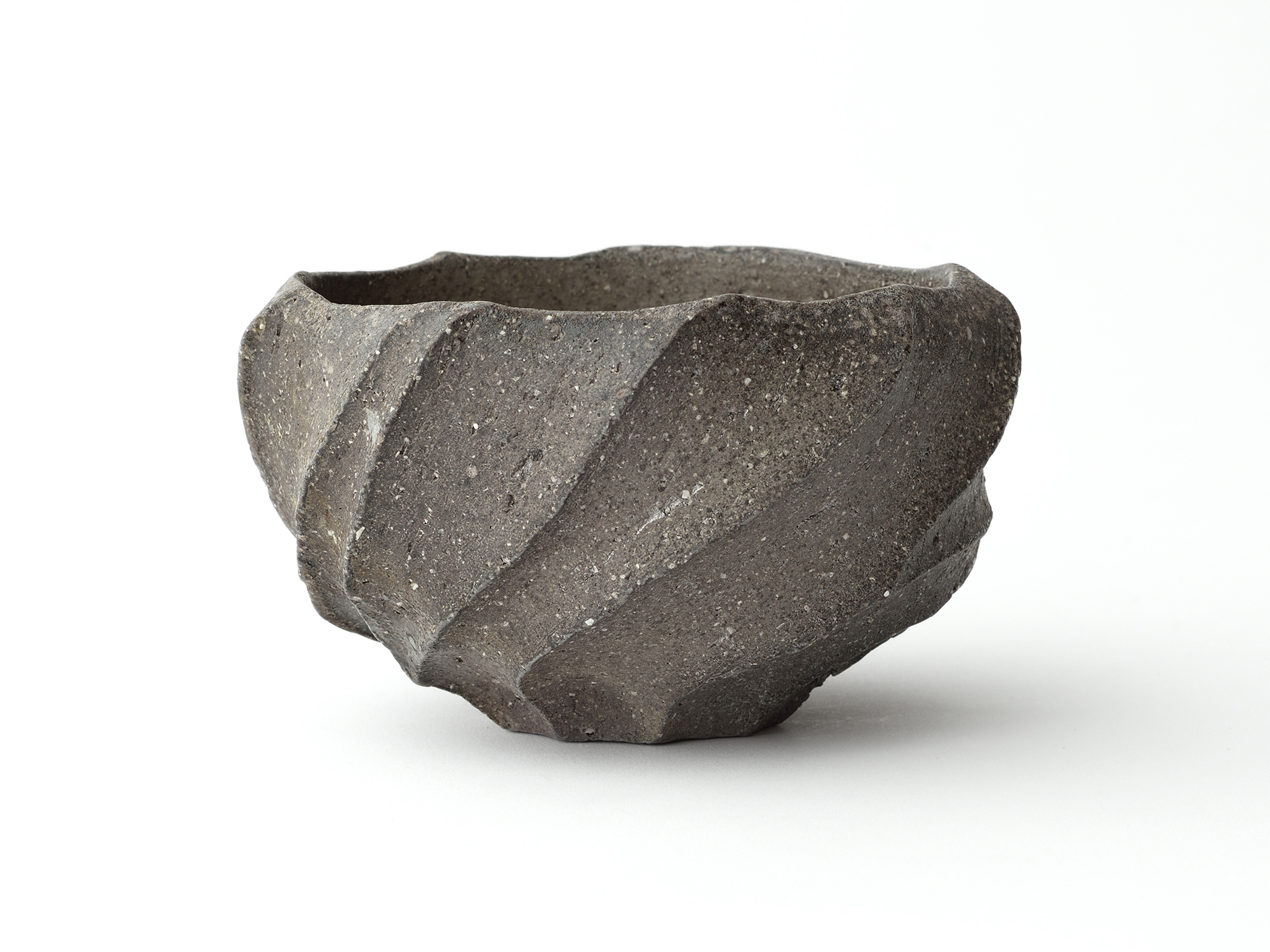


No.6Sold Out
| Author name | Yoshihiro Sako |
| Work name | Carbonized tea bowl |
| price | 50,000 yen (excluding tax) (55,000 yen including tax) |
| box | Comes with a paulownia wood box (to be delivered later) |
| size | W 14.5 × D 14.0 × H 8.5(㎝) |
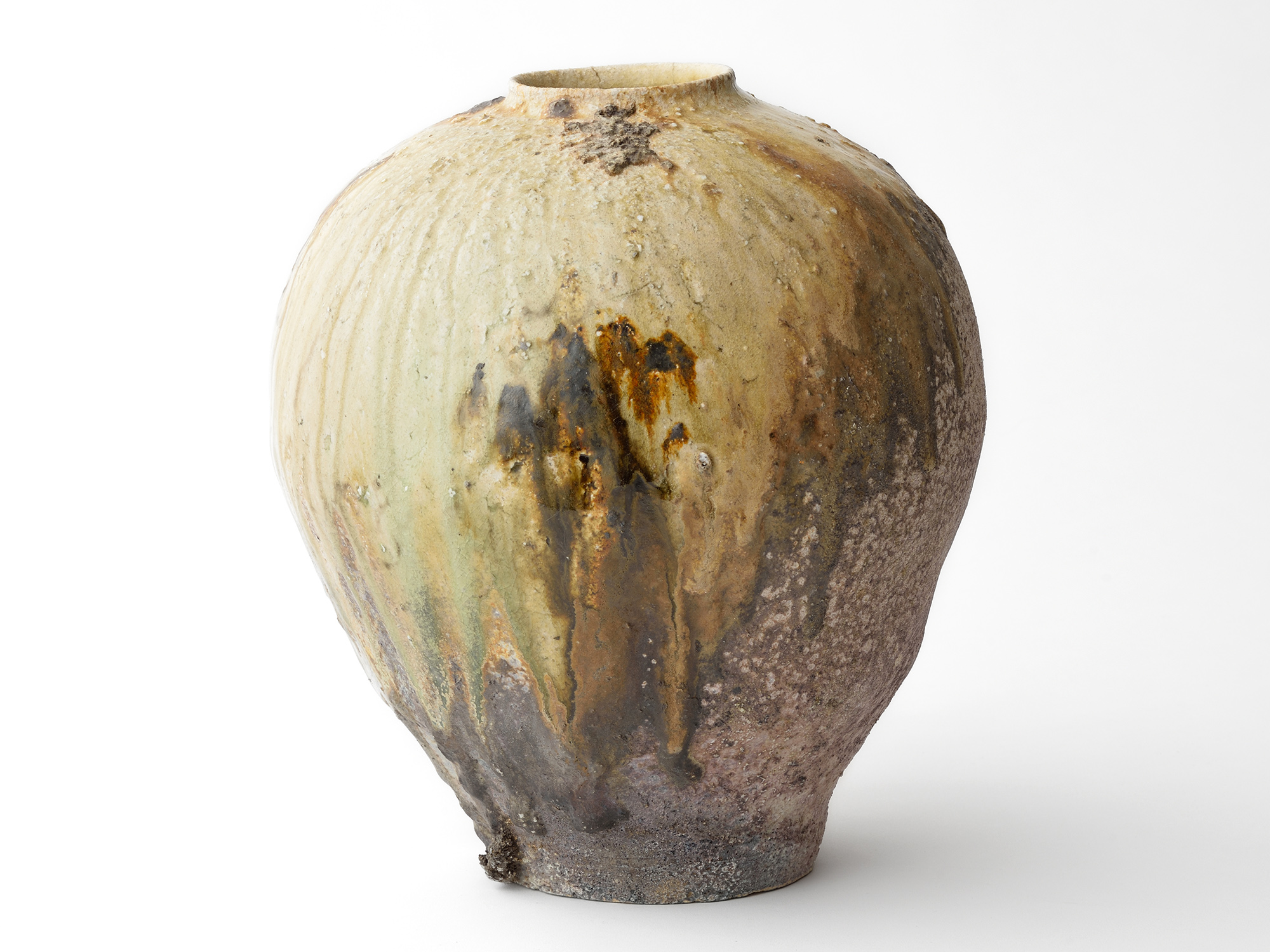
No.7
| Author name | Nozomi Shinohara |
| Work name | kiln change pot |
| price | 160,000 yen (excluding tax) (176,000 yen including tax) |
| box | Comes with a paulownia wood box (to be delivered later) |
| size | φ 30.0 × H 34.0(㎝) |

No.8
| Author name | Takahashi Rakusai |
| Work name | Cloisonné openwork bowl |
| price | 150,000 yen (excluding tax) (165,000 yen including tax) |
| box | Comes with a paulownia wood box (to be delivered later) |
| size | W 21.0 × D 20.0 × H 12.5(㎝) |


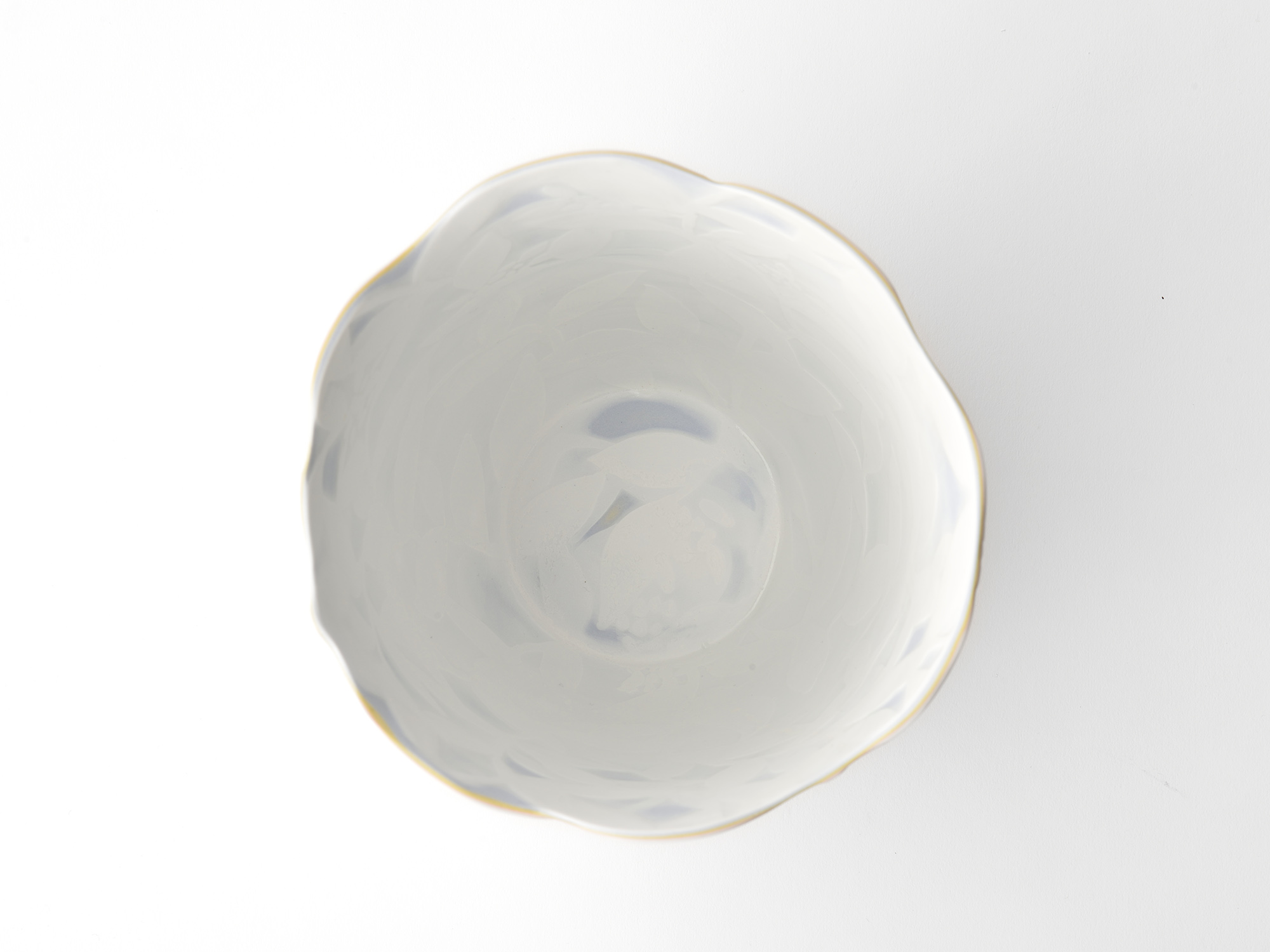
No.9
| Author name | Tomoko Takama |
| Work name | Layered colored porcelain - Vase - Like the fragrance of deutzia blossoms that seems to emanate from nowhere. |
| price | 120,000 yen (excluding tax) (132,000 yen including tax) |
| box | Comes with a paulownia wood box (to be delivered later) |
| size | W 19.5 × D 19.5 × H 22.0(㎝) |
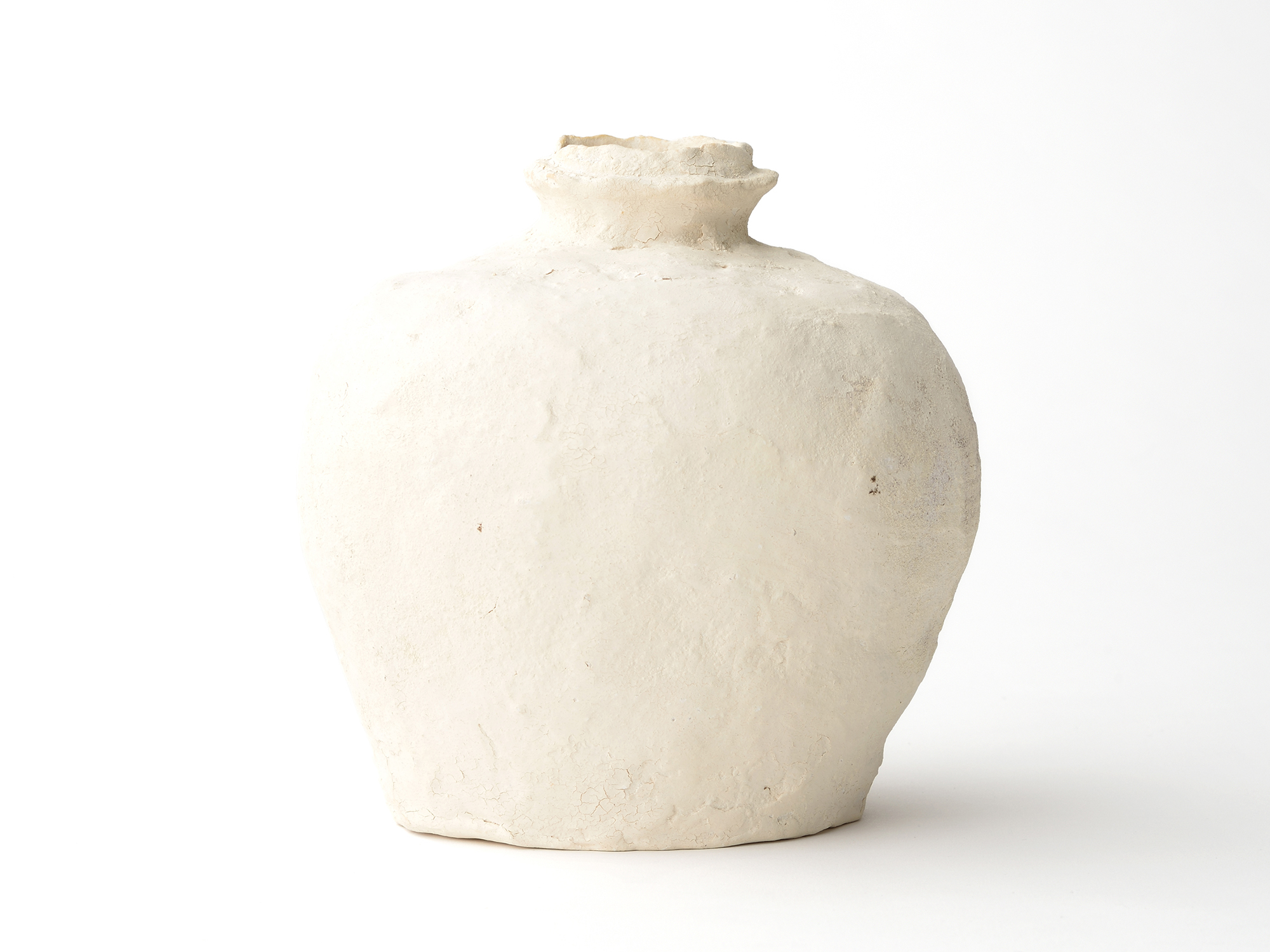
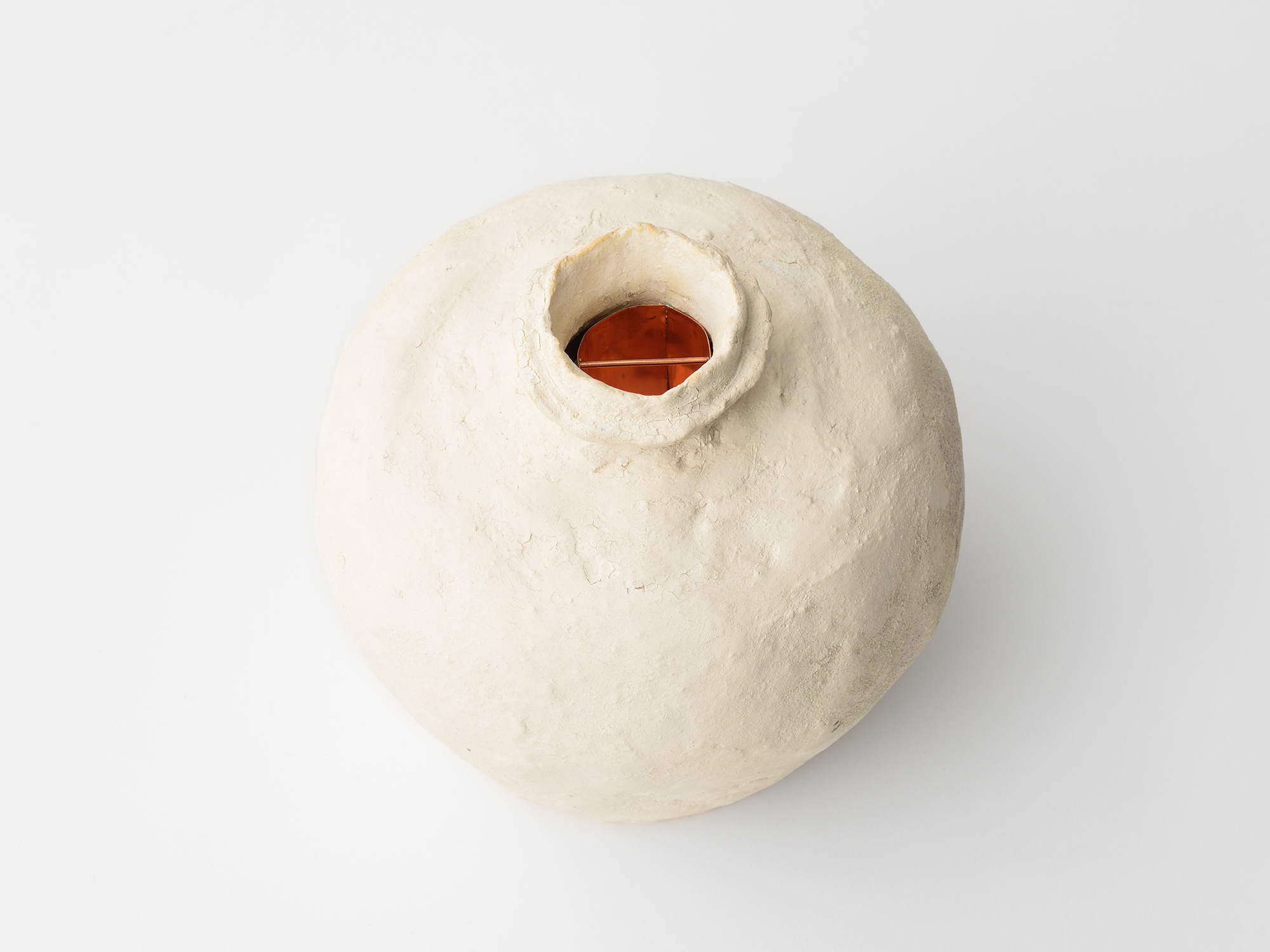
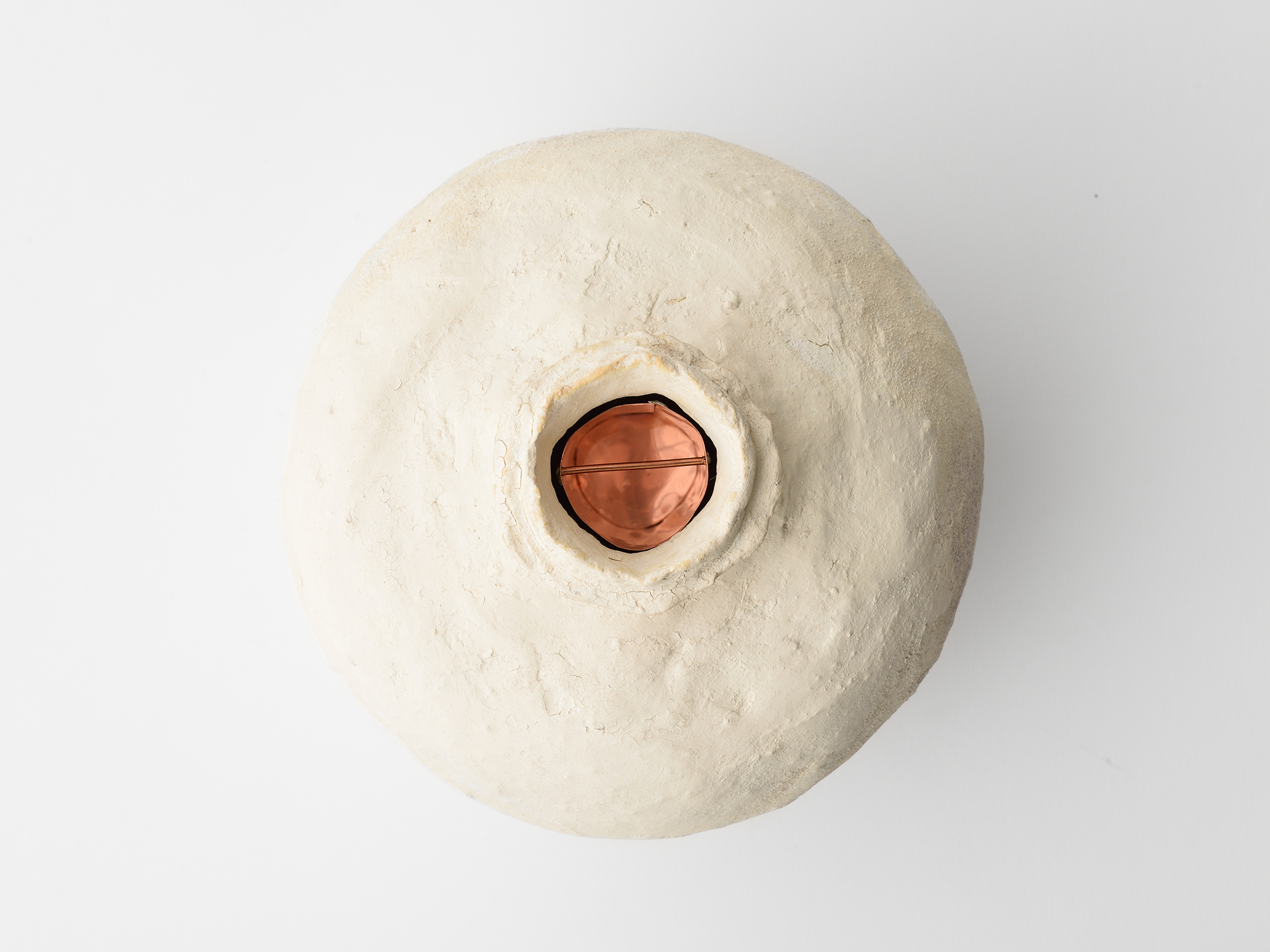
No.10
| Author name | valley |
| Work name | Shigaraki Tsukubai (stone basin) |
| price | 150,000 yen (excluding tax) (165,000 yen including tax) |
| box | Comes with a paulownia wood box (to be delivered later) |
| size | W 18.8 × D 18.8 × H 18.8(㎝) |


No.11Sold Out
| Author name | Aika Tsumori |
| Work name | Pianica Hiten Flying celestial beings playing music in the clouds. Apparently, the melodica is now called a keyboard harmonica. |
| price | 170,000 yen (excluding tax) (187,000 yen including tax) |
| box | No box |
| size | W 29.0 × D 14.0 × H 26.0(㎝) |
No.12
| Author name | Kazuya Furuya |
| Work name | Shigaraki mixed flower vase [We have a customer who is considering our services.] The raw clay was applied to the surface of the vessel and fired, and the rim was shaped to match the texture of the clay. |
| price | 130,000 yen (excluding tax) (143,000 yen including tax) |
| box | Comes with a paulownia wood box (to be delivered later) |
| size | φ 17.8 × H 26.8(㎝) |
Regarding sales methods
- ・
- DMWe accept advance reservations for the works displayed on this website before the exhibition begins. We will contact you approximately 20 days before the first day of the exhibition.DMWe ship the items and upload information to this website at almost the same time.
- ・
- For those who are unable to visit our gallery in person, we are happy to accept orders by phone or email.
- ・
- We look forward to receiving your inquiries.