Chitose's "Manyoshu" Heisei Folding Screen Exhibition [Cooperation: UNAC TOKYO]
| Exhibition period Schedule |
February 9, 2016 (Tue) – February 11 (Thu) February 9 - February 11, 2016 |
| Gallery opening hours Opening Hours | Open from 11:00 AM to 7:00 PM (until 5:00 PM on the last day). Open every day during the exhibition period. |
| Introduction Introduction |
The Power of Words Embodied in Characters / Kumakura Isao
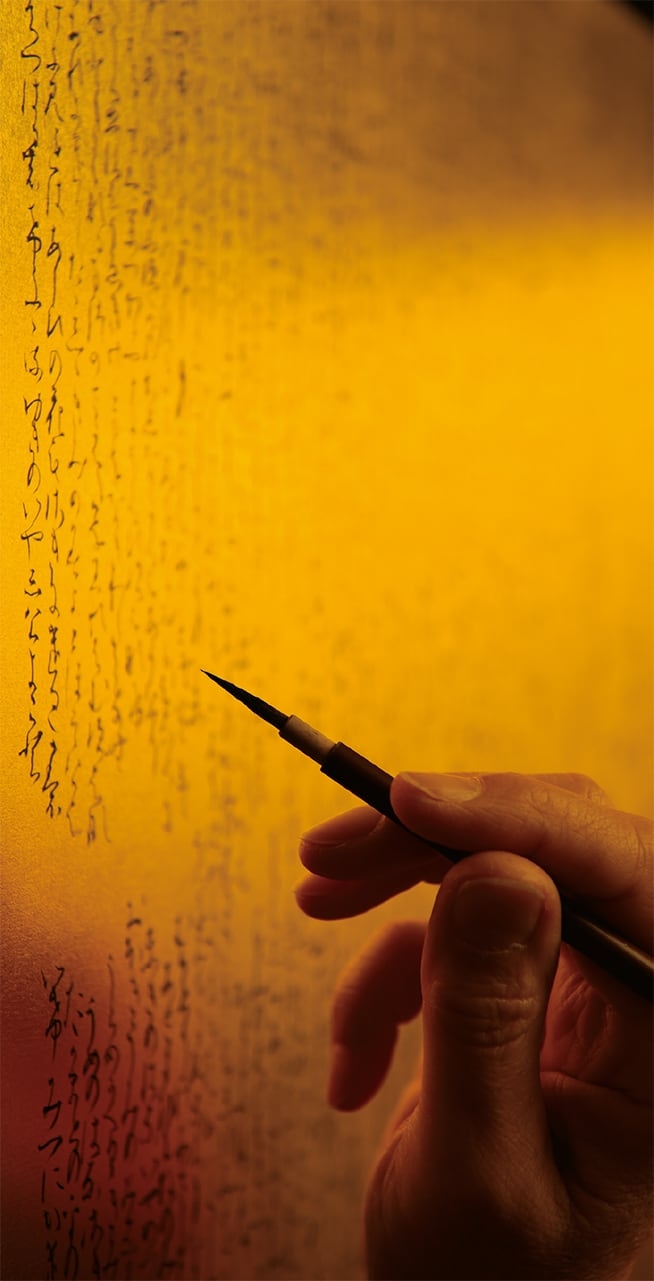
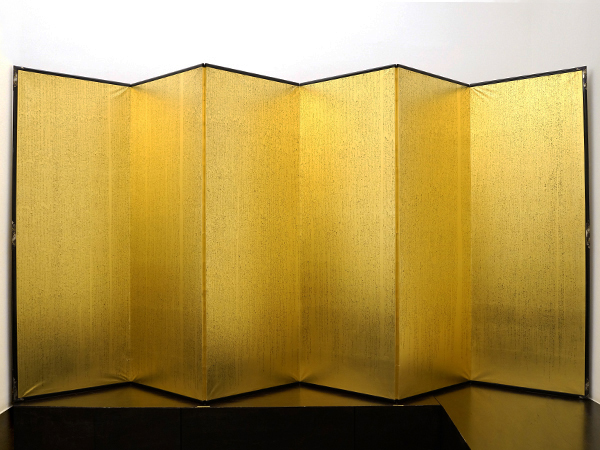
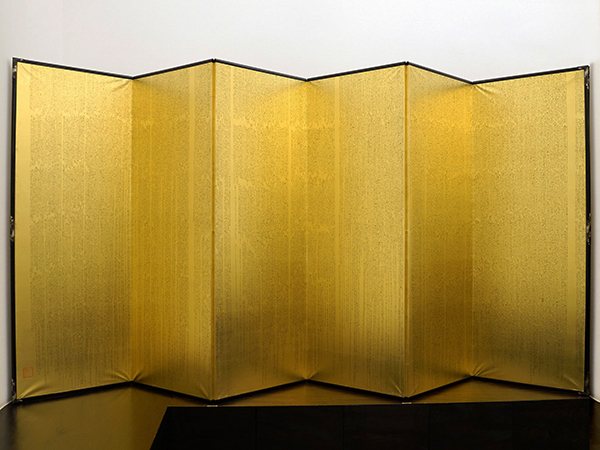
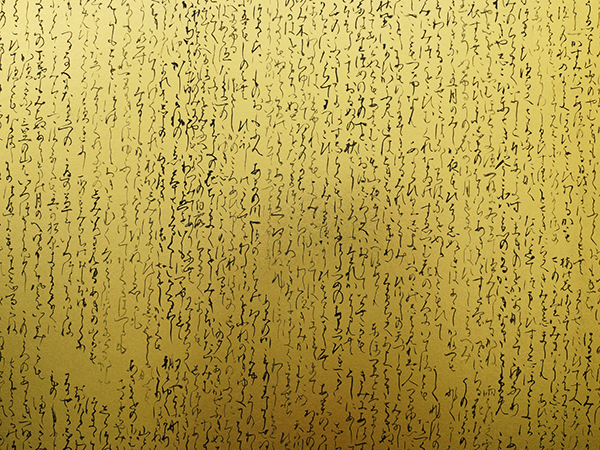
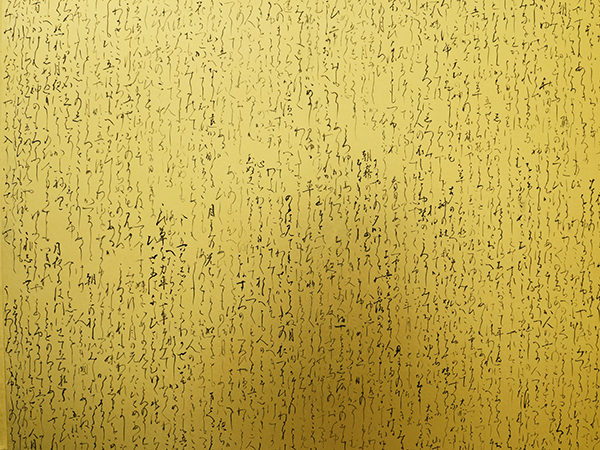
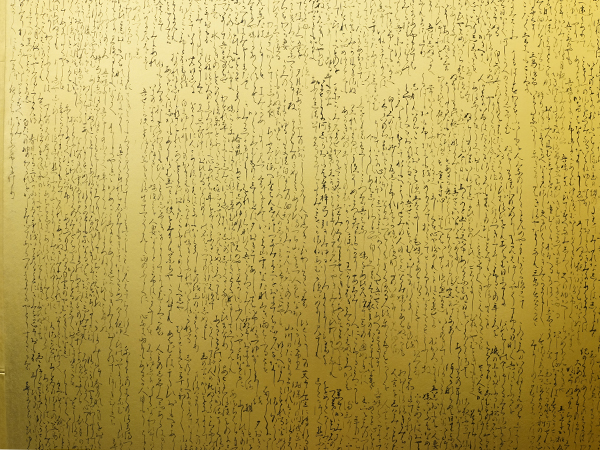
To be honest, I can't recall ever being asked to contribute an article and being so troubled by it. Normally, I have a pretty good grasp of what I should contribute and can imagine what I want to write next, but Ms. Chitose's work far exceeds my expectations, and I am left speechless in the face of this incredible piece. Seeing Chitose-san's six-panel folding screen set of the Manyoshu, the first thing that came to mind was a work from the Art Brut collection I had seen in Lausanne, Switzerland. The memory of being overwhelmed by the astonishing works spun from extraordinary energy resurfaced like a kind of déjà vu. Of course, Chitose's work is fundamentally different from Art Brut. Chitose is a perfectly normal, sensible person, and unlike outsider artists, she has received formal training in calligraphy. So she should be unrelated to Art Brut, but if there is anything they have in common, it would be their extraordinary passion for calligraphy. If there were people before Chitose-san who continued to write an unimaginable amount of beautiful and magnificent characters, the Nara period scribes would surely be one of them. Although they did not write these by their own will but were ordered to do so as work, the fact that they were able to transcribe such a vast amount of scripture must have been due to the power of religion. Religion had the power to draw out tremendous strength from within people. If we interpret religion more broadly and include the gods who are omnipresent in nature alongside us, then these gods often bring out the extraordinary abilities of humans. I believe that Ms. Chitose's writings were created guided by these "gods" or "spirits." Kotodama are spirits that reside in words. They also reside in characters. Chitose's calligraphy can be said to be the work of kotodama. For someone captivated by kotodama, writing is a physical movement that occurs as unconsciously as breathing in and out. Otherwise, it would be impossible to have written the Kojiki twice or compiled the entire Kokin Wakashū into a single work. Even with this Manyōshū, it was only because Chitose was able to let her brush move freely in a state that can only be described as one of complete detachment. Why the Manyoshu? As Masatomi Kaijo writes, it is an inevitable consequence of the lineage of National Learning that was passed down from Kamo no Mabuchi to Motoori Norinaga. ("Let's Look Back at the Origins of Calligraphy - A View of Chitose's Calligraphy Exhibition," June Wind). When Japan was shaken by big waves coming in from the continent, or from the West in modern times, and the axis of its culture wavered, the Manyoshu appeared, and people confirmed their own position. It has played the role of an anchor. In this modern age, when traditional culture is collapsing with a crash, Chitose must have pulled in the Manyoshu as an anchor. Standing before the Heisei-era Man'yōshū folding screen, I was seized by a strange sensation, as if the characters themselves were coming to life. Since lines are formed by the brush moving from top to bottom, the image of a waterfall cascading down from the heavens immediately comes to mind. However, to me, it also seemed as if the characters were climbing upwards. Each character seemed to become a living entity, intertwining and crowding together to create the Heisei-era Man'yōshū folding screen. The act of writing carries the mission of conveying the content to the reader. Yuuichi Inoue was probably the most strongly aware of this. However, Chitose is not trying to make viewers read the Manyoshu with this screen. What is important is that all 4,516 poems of the Manyoshu, the origin of Japanese poetry, are contained in this pair of screens, and she has opened up unprecedented territory in the way that the spiritual energy that overflows from each and every character, as if imbued with the power of words, overwhelms the viewer. I sincerely hope you will stand in front of the screen and receive the "spirit" contained within the characters. |
| Main exhibited works Main Exhibited Works |
|
| price | Not for sale |
| size | W 372 × D 2.0 × H 170 (㎝) |
| price | Not for sale |
| size | W 372 × D 2.0 × H 170 (㎝) |

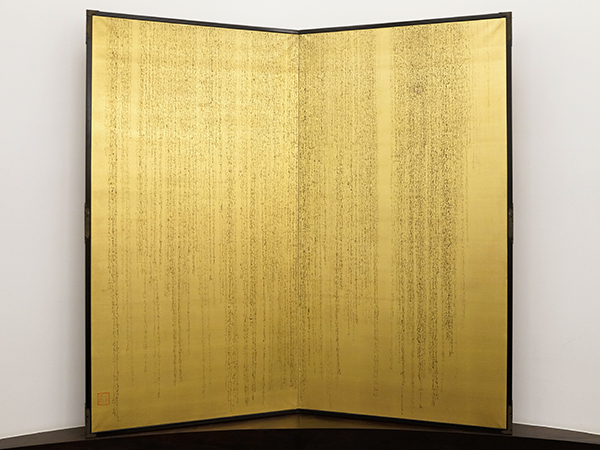
| Work name | Manyoshu Heisei Folding Screen: The Voice of the Line by Kakinomoto no Hitomaro |
| price | 1,296,000 |
| size | W 186 × D 2.0 × H 170 (㎝) |
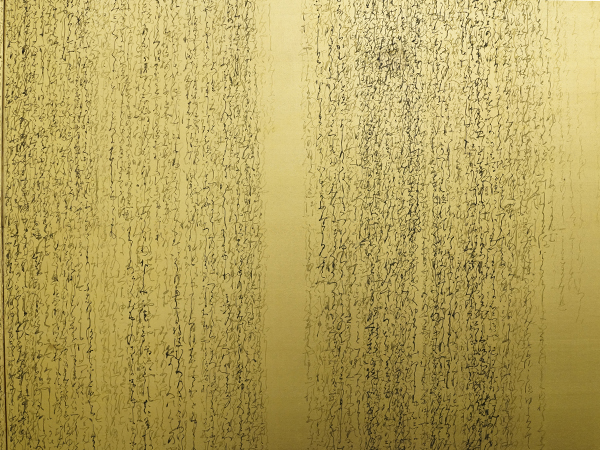

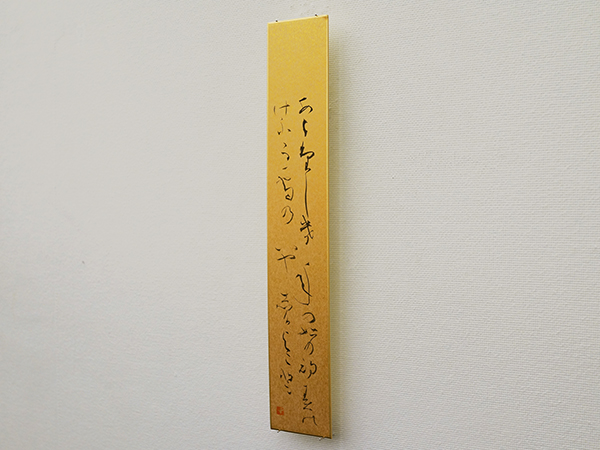
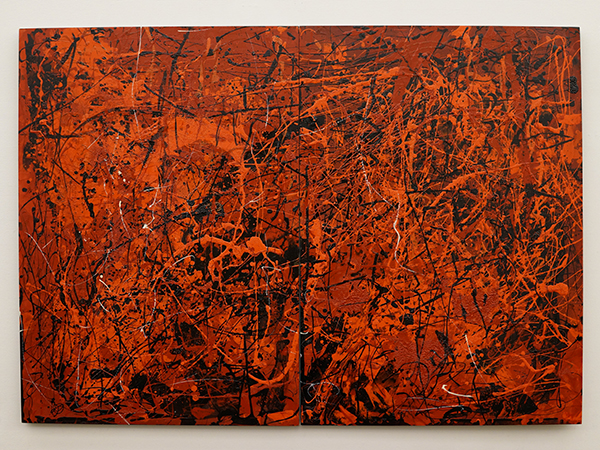
| Work name | Poems of Emperor Tenmu |
| price | 756,000 |
| size | W 146 × D 3.0 × H 103 (㎝) |
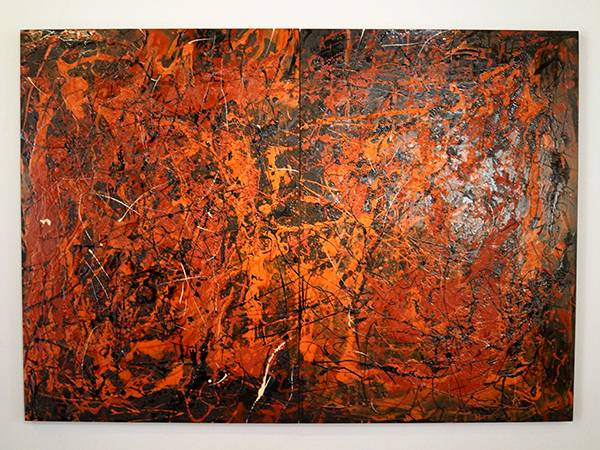
| Work name | Nukata no Ōkimi's poem |
| price | 756,000 |
| size | W 145 × D 3.0 × H 103 (㎝) |
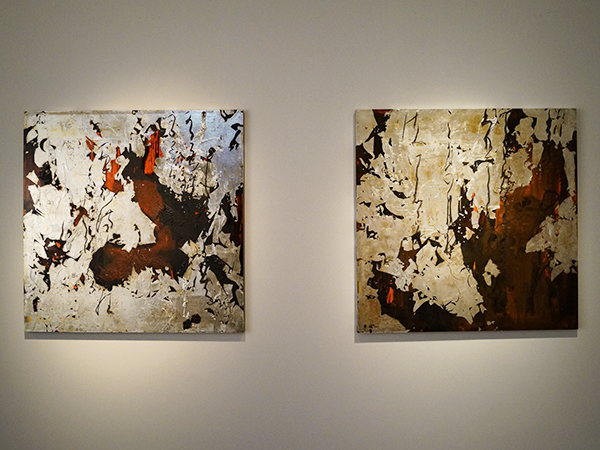
| Work name | [Left] Voice [Right] Voice |
| price | [Left] 129,600 [Right] 129,600 [Sold] |
| size | [Left] W 65 × D 65 × H 2.5 (cm) [Right] W 65 × D 65 × H 2.5 (cm) |
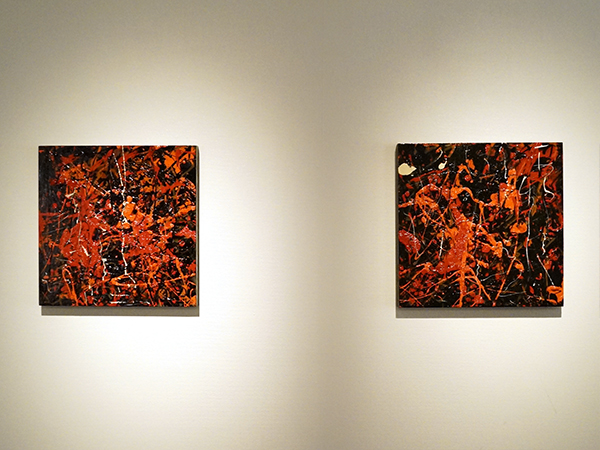
| Work name | [Left] A poem by Prince Shiki [Right] A poem by Otomo no Yakamochi |
| price | [Left] 54,000 [Right] 54,000 |
| size | [Left] W 30 × D 30 × H 2.0 (cm) [Right] W 30 × D 30 × H 2.0 (cm) |

| Work name | [Left] Kasarōme Uta (Song of Kasarōme) [Right] Kasarōme Uta (Song of Kasarōme) |
| price | [Left] 27,000 [Sold] [Right] 27,000 |
| size | [Left] W 18.5 × D 26 × H 2.0 (cm) [Left] W 18.5 × D 26 × H 2.0 (cm) |
Regarding sales methods
- ・
- DMWe accept advance reservations for the works displayed on this website before the exhibition begins. We will contact you approximately 20 days before the first day of the exhibition.DMWe ship the items and upload information to this website at almost the same time.
- ・
- For those who are unable to visit our gallery in person, we are happy to accept orders by phone or email.
- ・
- We look forward to receiving your inquiries.