Twelve Karatsu Pottery Exhibition - Tableware for Tea Ceremony Meals -
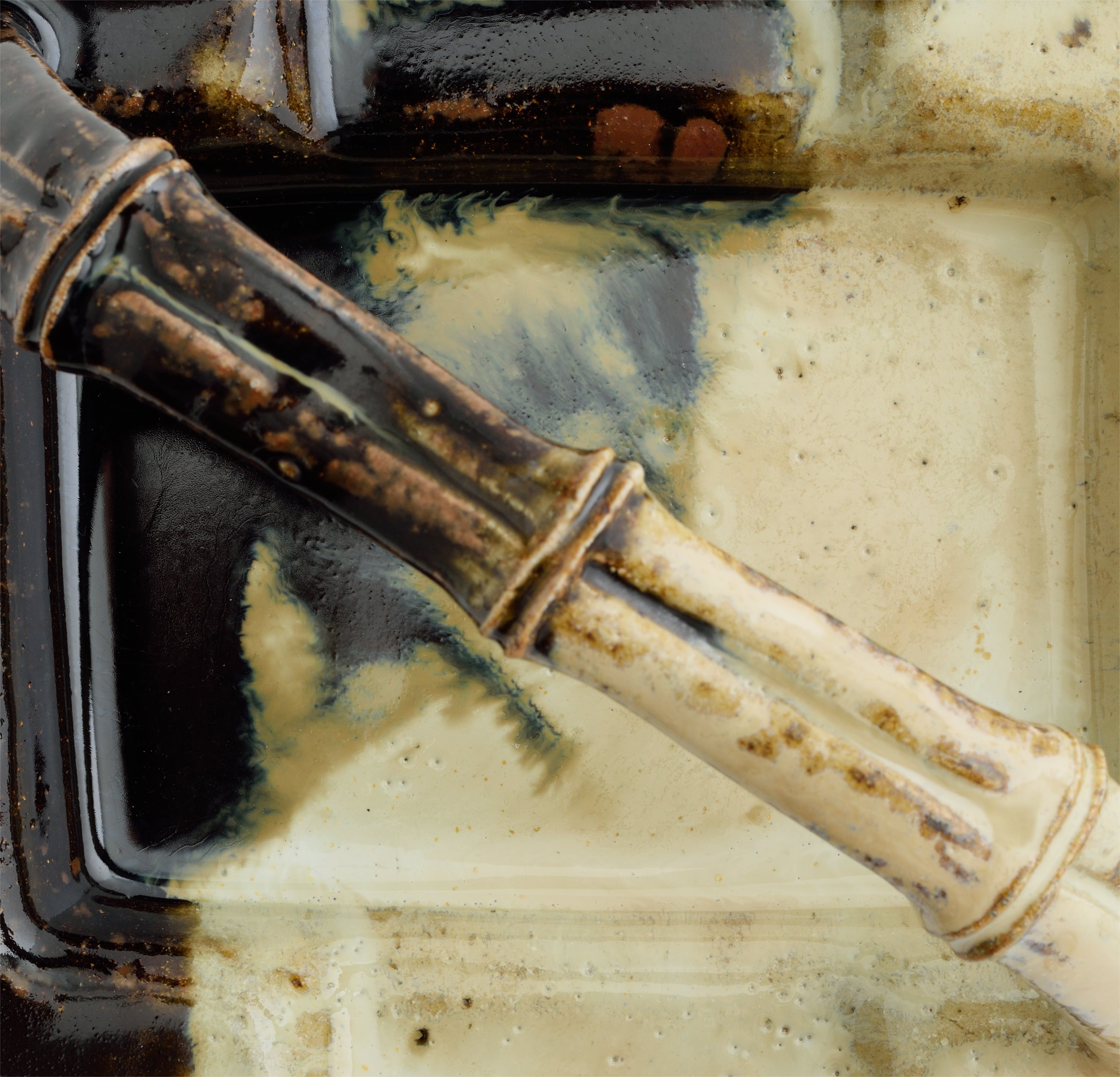
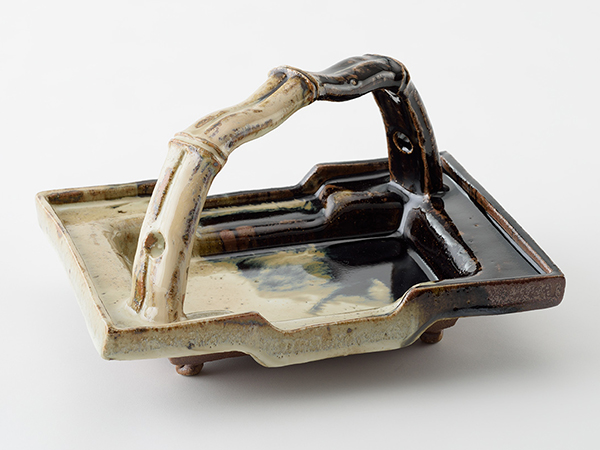
Korean Karatsu Square Handled Bowl / Made by Sakurei Okamoto
| Exhibition period Schedule |
February 23, 2016 (Tue) – February 29 (Mon) February 23 - February 29, 2016 |
| Gallery opening hours Opening Hours | Open from 11:00 AM to 7:00 PM (until 5:00 PM on the last day). Open every day during the exhibition period. |
| Exhibiting artist Artist | The late Kai Yoshino , Sakurei Okamoto , Yasumoto Kajiwara , Kiyomi Kawakami , Masahiro Takehana , Sajirou Tanaka , Taki Nakazato , 14th generation Tarouemon Nakazato , Dohei Fujinoki , Kentarou Murayama , Raizan Yasunaga , Naoto Yano (Alphabetical order) |
| Introduction Introduction |
A message regarding the "Twelve Karatsu Ware Exhibition - Tableware for Tea Ceremony Meals -" This will be the fourth time that the Karatsu ware artist exhibition is being held at the Kakiden Gallery. This year's theme is "Tableware for Tea Ceremony Meals." This theme was decided for the exhibition held two years ago. Karatsu ware is very popular, and thanks to the efforts of young artists, it seems to be doing well. However, we decided on this theme because we don't want to rest on our laurels, but rather aim for even greater heights. Last year, I had the opportunity to see an antique Karatsu ware mukozuke (small dish) at a collector's home. It was a delicate piece with a thin body. I had seen this style of work in fragments of pottery, but seeing the actual pieces made me realize that Karatsu ware is not just one style, but rather a wide range of pieces, from simple everyday tableware to delicate utensils for tea ceremonies. Among Japanese pottery, Karatsu ware stands out from the rest. This is because, just as Korean pottery aimed to be like porcelain, the sandstone used as raw material for Karatsu ware is very similar to porcelain clay. While Karatsu ware uses more than one type of clay, I believe the true charm of Momoyama Karatsu lies in the clay itself. Because the clay is similar to the white porcelain ore used in Korea, I believe the surface is fired to a high degree of density, and the more you use it, the more character it develops. The charm of Karatsu ware lies in the sincere engagement with the clay, the raw material. This attitude is still carried on by contemporary Karatsu ware artists. Sakurei Okamoto has incorporated a technique of creating molds similar to those used for Oribe ware, which is unprecedented in Karatsu ware, resulting in a sharp and distinctive style.<朝鮮唐津四方手付鉢>The piece has been put up for sale. It is a four-legged bowl with white straw ash glaze and black glaze applied to the left and right sides, and a strong bamboo joint handle. It was born from a free-thinking approach that was reached after studying the fundamentals of old Karatsu ware. Yasumoto Kajiwara has previously been known for his "Kajiwara Karatsu" ware, which is fired using Karatsu sandstone, but this time he has tried his hand at Tenmoku glaze for the first time.<天目釉向付>The raw material for this product is also sandstone from Karatsu. Mr. Kajiwara is challenging new possibilities using natural materials from Karatsu. Kiyomi Kawakami says, "If we consider the beauty of Mino ware to be like sunlight, then the beauty of Joseon dynasty ware must be like moonlight. Karatsu ware is a fusion of these two beauties." This statement is very insightful.<井戸茶碗>This tea bowl truly embodies the fusion of yin and yang, gentleness and strength. Masahiro Takehana<斑唐津茶碗>His work is characterized by its fine wood grain, earthy texture, and soft glaze. Mr. Takehana aims for an unpretentious, antique style, stripping away all artificiality from his pieces and striving to make them appear as natural as possible. Sajirou Tanaka has built kilns in two countries, Yamase Kiln in Karatsu and Kameyama Kiln in Ulsan on the Korean Peninsula, and has accumulated over 810 firings to date.<絵唐津盃><玄黄盃><雲彩盃>These three works were born from that struggle with fire, and originated from a state of mind where "the past and present are one." Taki Nakazato 's<唐津南蛮割山椒向附>This is a mukozuke (small dish for serving food) made to the dimensions of the oshiki (small tray) used in tea ceremony meals. The Nanban style began when his father, Takashi, traveled to Tanegashima and tried his hand at unglazed stoneware. As Takashi was known as a gourmet, Taiki's mukozuke are vessels that beautifully showcase the food served on them. Tarouemon Nakazato the 14th generation<斑唐津向付>This is a beautiful, split-pepper-shaped mukozuke (small dish) with a white glaze. It's a little small for a tea ceremony meal, but it's a very charming mukozuke. It embodies the desire to "create what I believe in and want to make, in this land of Karatsu, using Karatsu materials." Mr. Dohei Fujinoki<絵唐津食籠>This is a lidded container made using a mold. It seems that Mr. Fujinoki acquired this technique in Mino. The iron-rich shale gives it a warm, earthy feel, and the feldspar glaze is applied with a ladle, creating a slight plum blossom-like texture. Kentarou Murayama 's<黄唐津茶碗>This piece beautifully showcases the texture of the earthenware, and is well-fired at around 1280 degrees Celsius. Mr. Murayama says he likes the yellowish-brown color of this clay, which contains a lot of iron. It's a flat tea bowl that would look great against the green of tea. Raizan Yasunaga has created a new tea<翠明茶>It was given that name. It is made using clay similar to Korean porcelain clay and fired at 1300 degrees Celsius. A pale green color develops, with a slight flow of pale yellow glaze, creating a gentle appearance. Naoto Yano<李朝堅手徳利>Using white porcelain sandstone, they challenged the Joseon Dynasty, the origin of Old Karatsu ware, while<斑唐津ぐい吞>This piece uses coarse-grained Yoshinoya sandstone. In addition, works from a new kiln, which was converted from a multi-chamber type to a split-bamboo type kiln between last autumn and the end of last year, will also be exhibited. Kai Yoshino is a ceramic artist who was among the first to attempt to recreate Momoyama Karatsu ware using sandstone.<本手絵唐津四方平向付>These pieces are also made in accordance with the fundamentals of old Karatsu ware. Although she passed away last November, a joint exhibition of Kai Yoshino and her daughter Keiko will be held at the Kakiden Gallery from March 13th to 19th this year. Kouichi Mori (Art critic, Standing Director of the Japan Ceramic Society) |
| Biography Biography | □ Sakurei Okamoto Born in Karatsu in 1958. In 1979, he trained at a Karatsu ware pottery studio. In 1989, a kiln was built at the current location. In 1999, I learned the pâte de veuère technique at the Notojima Glass Studio. Held a solo exhibition at Ginza Kuroda Touen in 2002, and has since presented new works every year. Seeking new forms of expression, a Franco-Japanese contemporary ceramics exhibition will be held at the Kyushu Ceramic Culture Center in collaboration with a French ceramic artist. In 2003, she exhibited her work at the Tokyo Metropolitan Teien Art Museum in an exhibition titled "Reception and Dissemination of Contemporary Japanese Ceramics." Solo exhibition at Nomura Museum of Art, Kyoto, 2008. □ Yasumoto Kajiwara Born in 1962 in Minamihata, Imari City. Graduated from Arita Technical High School, Design Department in 1980. Apprenticed at Taiko Sannomaru Kiln, a Karatsu ware pottery studio. In 1926, he studied under Mr. Kitamine Daimaru and learned about sencha tea ceremony utensils. August-November 2003: Overseas training in South Korea September 2005: NHK BS2 broadcast "Reviving the Wabi-style Tea Bowl". June 2007: Appeared on NHK Educational TV's "The Beauty of Things." □ Kiyomi Kawakami Born in 1948 in Tsushima City, Nagasaki Prefecture. From 1979 onwards, I trained in Seto, Karatsu, Bizen, and then again in Karatsu. Established in 1988 in Handa, Karatsu City. From 1990 onwards, held solo exhibitions at department stores and galleries in various locations. □ Masahiro Takehana Born in Tokyo in 1974. In 2000, I trained for three years at Aya Kiln in Karatsu. In 2003, a split-bamboo climbing kiln was built in Kyōki Town. 2004: First firing of the kiln □ Sajirou Tanaka Born in Fukuoka Prefecture in 1937. In 1965, he began studying Jomon and Yayoi pottery and started practicing hand-building. In 1971, he began his pottery-making activities after excavating the ancient kiln site of Hizen Karatsu. In 1975, he built a climbing kiln in Karatsu. In 2004, built a climbing kiln in South Korea. □ Taki Nakazato Born in Karatsu in 1965. In 1988, I began working with pottery under the guidance of my father, Takashi Nakazato In 1993, Takashi Nakazato and Oku Sanjuro exhibited their work in a three-person exhibition at Kakiden Gallery. In 1994, exhibited at a father-son exhibition at Manyodo Miyuki store. □14th Tarouemon Nakazato Born in 1957 as the eldest son of the 13th generation Tarouemon Nakazato In 1984, his hand-painted blue Karatsu ware vase "Kai-ryoku" was selected for the first time at the 16th Nitten Exhibition. In 2002, he became a member of the International Academy of Ceramics (IAC) and succeeded to the name of the 14th Tarouemon Nakazato In 2005, his "Karatsu Ido Tea Bowl" was selected for the 52nd Japan Traditional Crafts Exhibition, and he was selected six more times until 2010. In October 2006, during Their Majesties the Emperor and Empress's visit to Saga Prefecture, they inspected the Tojinmachi Tea Bowl Kiln and Workshop, which have been designated a national historical site, and I had the honor of providing them with an explanation. "Heat-stamped Korean Karatsu ware vase" presented to Their Majesties from Saga Prefecture. Became a full member of the Japan Crafts Association in 2007. In 2010, he was appointed Vice Chairman of the Saga Prefectural Ceramics Association. In 2011, he received the Karatsu City Municipal Service Award and the Blue Ribbon Medal. □ Dohei Fujinoki Born in Niigata Prefecture in 1949. 1975: Studied under Mr. Hiroshi Ohashi in Karatsu. 1978: Studied under Yoshiemon Kato in Mino Province. In 1980, Tsuchihira Kiln was opened in Chinzei Town. □ Kentarou Murayama Born in Karatsu City in 1978. Graduated from Arita Ceramic College in 2003. Studied under Kiyomi Kawakami In 2008, he built a kiln in Karatsu City and became independent. □ Raizan Yasunaga Born in 1970 in Masuda City, Shimane Prefecture. In 2001, I trained for two years under Sajirou Tanaka . In 2003, I trained for three years under Dohei Fujinoki . 2008: Built a climbing kiln. In 2013, he changed his name to Raiyama, a name given to him by Sajirou Tanaka □ Naoto Yano Born in Karatsu City in 1976. 1994: Studied abroad in the United States for five years. Graduated from Saga Prefectural Arita Ceramic College in 2002. 2003: Part-time lecturer at Saga Prefectural Arita Ceramic College In 2004, I began making pottery at my home, Tonoyama Kiln. Pottery making for six months in Ulsan, South Korea in 2008. □ Kai Yoshino Born in Imari City in 1941. In 1970, he built a four-chamber climbing kiln and began making pottery. Since then, I have been drawn to the unique texture of "Ko-Karatsu" ware and have dedicated myself to researching the clay, glaze, and kiln firing processes. 2003 First solo exhibition of “Enirono” In 2013, he changed his name to "Kai". Passed away in 2015. |
| Artist in the gallery day Date Artist in Gallery | Tuesday, the 23rd: Yasumoto Kajiwara , Sajirou Tanaka , Tarouemon Nakazato (14th generation), Kentarou Murayama , Raizan Yasunaga , Naoto Yano , Keiko Yoshino Wednesday, the 24th: Kentarou Murayama , Raizan Yasunaga , Keiko Yoshino Friday, the 26th: Sakurei Okamoto Saturday, the 27th: Sakurei Okamoto , Dohei Fujinoki 28th (Sun) Sakurei Okamoto 29th (Mon) Sakurei Okamoto |
| notice Notice | ■Opening Reception Party On the opening day of this exhibition, we will be holding a small standing reception at the exhibition venue. We will be serving appetizers and sake from the Kyoto-style kaiseki restaurant "Kakiden," so please feel free to join us. Date and Time: Tuesday, February 23rd, 17:00 - 19:00 • Location: Kakiden Gallery No application required. ■■Special Commemorative Tea Ceremony A special commemorative tea ceremony will be held at the Kakiden Tea Room located above the Kakiden Gallery. Even if you've never participated in a tea ceremony before, you are more than welcome, so please feel free to come and enjoy a cup of tea using tea utensils associated with Karatsu. • Date and Time: Sunday, February 28th, with three seating slots available at 10:00, 11:00, and 13:00. • Location: Shinjuku Kyo-kaiseki Kakiden (Yasuyo Building, 3-37-11 Shinjuku, Shinjuku-ku, Tokyo) Tea ceremony room "Zangetsu (9th floor)", light meal room "Kokin Salon (6th floor)", reception and donation room "An'yo Hall (7th floor)" Please arrive 15 minutes before your seat is to be seated. - Host: Sakurei Okamoto , one of the exhibiting artists Membership fee: 5,000 yen (tax included) • Estimated time: just under 2 hours ・Registration: If you wish to participate, please register by phone, fax, or email with Kakiden Gallery. (TEL 03-3352-5118, FAX 03-5269-0335, gallery@kakiden.com. Phone calls are accepted from 11:00 to 19:00, excluding gallery closing days.) ■■■Collaboration exhibition held concurrently: "Karatsu and Arita Spring Pottery Exhibition / GALERIE AZUR (Shibuya Cerulean Tower)" As a collaborative exhibition held concurrently with this exhibition, the "Karatsu/Arita Spring Ceramics Exhibition" will be held at "GALERIE AZUR" in Shibuya, Tokyo. GALERIE AZUR is a wonderful gallery located on the first floor of the Cerulean Tower Tokyu Hotel, a landmark in Shibuya's west exit area. Many fascinating pieces of pottery will be on display at this year's "Karatsu and Arita Spring Pottery Exhibition." We hope you will take the time to visit Shibuya. • Exhibition period: February 23rd (Tue) - 29th (Mon), 11:00 - 18:00 (Irregular closing days) Venue: 1F, Cerulean Tower Tokyu Hotel, 26-1 Sakuragaoka-cho, Shibuya-ku, Tokyo GALERIE AZUR • Organized by: GALLERY 1bankan TEL&FAX: 03-6427-0029 e-mail: info@1bankan.com |
| Main exhibited works Main Exhibited Works |
|
| Author name | Sakurei Okamoto |
| Work name | Korean Karatsu Square Handled Bowl |
| price | 86,400 [Sold] |
| size | W 25.6 × D 20.4 × H 15.2 (㎝) |

| Author name | Yasumoto Kajiwara |
| Work name | Tenmoku glaze (5 customers) |
| price | 54,000 |
| size | φ 12.0 × H 4.5 (㎝) |
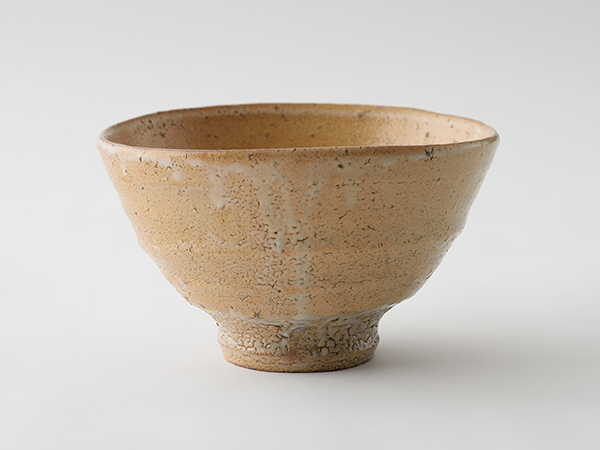
| Author name | Kiyomi Kawakami |
| Work name | Ido tea bowl |
| price | 324,000 |
| size | W 16.2 × D 15.2 × H 9.5 (㎝) |

| Author name | Masahiro Takehana |
| Work name | Spotted Karatsu tea bowl |
| price | 54,000 |
| size | φ 13.4 × H 7.4 (㎝) |
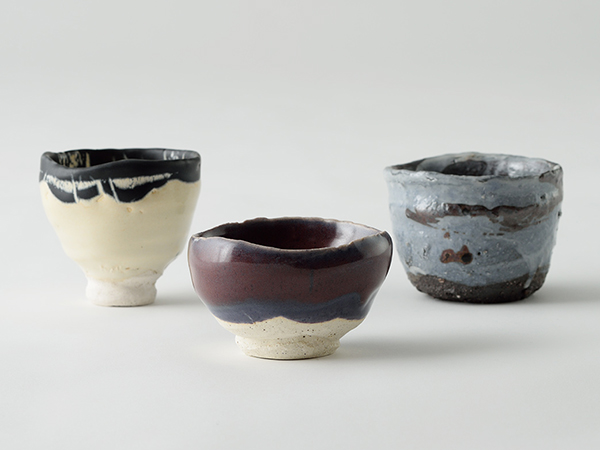
| Author name | Sajirou Tanaka |
| Work name | [Right] Painted Karatsu sake cup [Center] Unsai cup [Left] Genko cup |
| price | [Right] 86,400 [Central] 86,400 [Sold] [Left] 86,400 |
| size | [Right] φ 8.2 × H 6.0 (cm) [Center] φ8.3 × H5.1 (cm) [Left] φ7.2 × H6.7 (cm) |
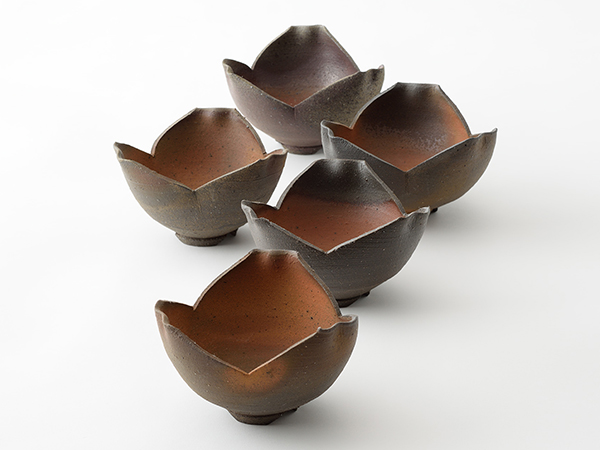
| Author name | Taki Nakazato |
| Work name | Karatsu Nanban Wari Sansho Mukai (5 guests group) |
| price | 32,400 [Sold] |
| size | φ 13.0×H 7.5 (㎝) |

| Author name | 14th Tarouemon Nakazato |
| Work name | Spotted Karatsu Serving Dishes (Set of 5) |
| price | 86,400 [Sold] |
| size | φ 9.0×H 8.3 (㎝) |
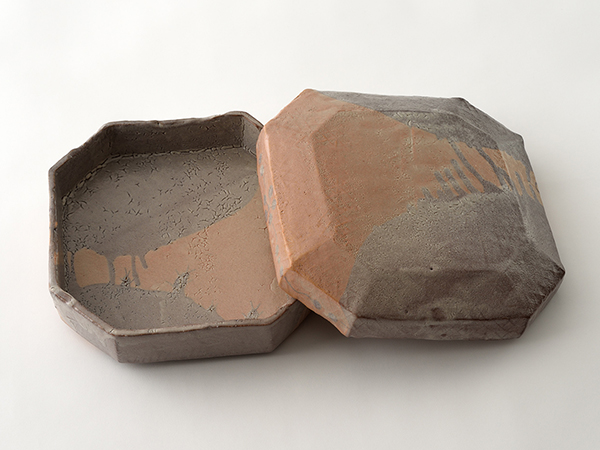
| Author name | Dohei Fujinoki |
| Work name | Picture Karatsu Food Box |
| price | 108,000 [Sold] |
| size | W 24.0×D 23.6× H7.6 (㎝) |
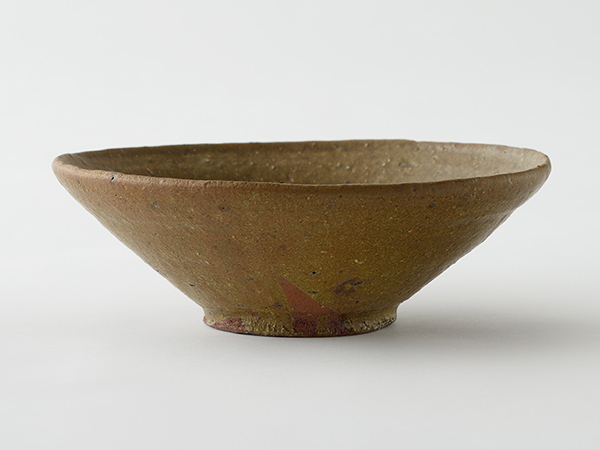
| Author name | Kentarou Murayama |
| Work name | Yellow Karatsu tea bowl |
| price | 86,400 |
| size | φ 16.6× H5.6 (㎝) |

| Author name | Raizan Yasunaga |
| Work name | Suimei tea bowl |
| price | 108,000 [Sold] |
| size | φ 12.3×H 9.2 (㎝) |
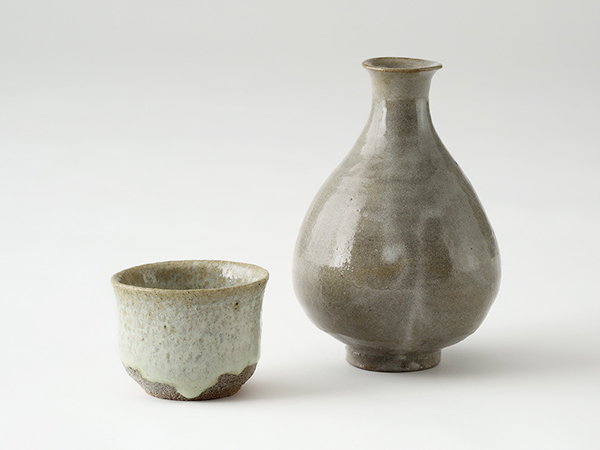
| Author name | Naoto Yano |
| Work name | [Right] Joseon Dynasty style sake bottle [Left] Madara Karatsu sake cup |
| price | [Right] 19,440 [Left] 8,640 [Sold] |
| size | [Right] φ9.4 × H13.6 (cm) [Left] φ 6.7×H 5.1 (cm) |
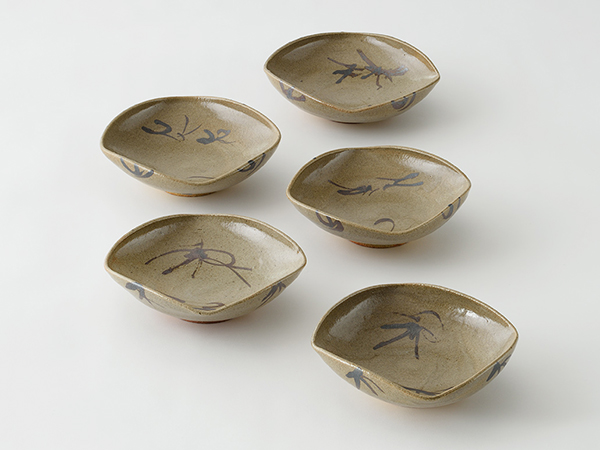
| Author name | Kai Yoshino |
| Work name | Authentic painted Karatsu ware square flat serving dishes (set of 5) |
| price | 54,000 [Sold] |
| size | W 14.8×D 14.8×H 4.8 (㎝) |
Regarding sales methods
- ・
- DMWe accept advance reservations for the works displayed on this website before the exhibition begins. We will contact you approximately 20 days before the first day of the exhibition.DMWe ship the items and upload information to this website at almost the same time.
- ・
- For those who are unable to visit our gallery in person, we are happy to accept orders by phone or email.
- ・
- We look forward to receiving your inquiries.