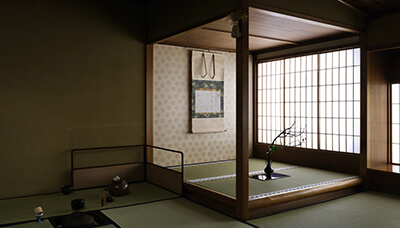
I Love Karatsu - An Exhibition of Flower Vases, Tea Bowls, and Sake Vessels by 14 Artists
| Exhibition period Schedule |
February 10, 2014 (Mon) – February 16 (Sun) February 10 - February 16, 2014 |
| Gallery opening hours Opening Hours | Open from 11:00 AM to 7:00 PM (until 5:00 PM on the last day). Open every day during the exhibition period. |
| Exhibiting artist Artist | Sakurei Okamoto , Yasumoto Kajiwara , Kiyomi Kawakami , Chiharu Kumamoto , Naoki Kojima , Masahiro Takehana , Sajirou Tanaka , Taki Nakazato , 14th Tarouemon Nakazato , Setsuo Hamazaki , Dohei Fujinoki , Raizan Yasunaga , Naoto Yano , Kai Yoshino (Alphabetical order) |
| Introduction Introduction |
"About the Charm of Karatsu Ware" The appeal of pottery lies not only in its form, but also in the quality of the clay and the firing process. Especially in the case of Karatsu ware, the quality of the clay and the firing process determine the beauty of the work. It was Kazuo Yagi of the "Sodeisha" group, who sought pure form in pottery, who dismissed this quality of pottery as an "instinctive charm." Also, Shoji Hamada wrote in his book "Mujinzō" that "quality is in the parts, while feeling is in the whole. Those who speak of quality, even if their perspective is meticulous, are somehow trapped by the object. Those who view with feeling are detached and confront it from their own perspective." This is perfectly natural from the perspective of the flow of art movements, and until very recently, I myself thought so. However, when I considered the root of the Japanese sensibility, I began to question this way of thinking. China is a land of stone. Jade, copperware, and porcelain are all originally minerals. There is a philosophy of stone there, but there is no method for cultivating stone. However, Japan is a land of soil. Since the Jomon period, Japan has built a relationship of coexistence and mutual prosperity with nature, and later cultivated satoyama (rural landscapes) and satoumi (coastal landscapes). For the Japanese, nature is not something to be rejected but something to be accepted, and that is why a culture rich in nature was born. Without such a cultural foundation, the idea of "cultivating soil" and the sensibility of "earthy flavor and fired flavor" would not have been born. When you think about it this way, I believe that "earthy flavor and fired flavor" are important things that relate to the essence of the Japanese people. Now, let's return to the topic of Karatsu ware. The more you use Karatsu ware, the better its texture becomes and the deeper its character deepens. That's why even a fragment of it looks good and is durable enough to be used. In short, Karatsu ware continues to develop even after it's fired. This is not the case with porcelain, which strives for perfection. This is a sensibility unique to the Japanese, who seek change. In fact, pottery itself is inherently a product of change. Plates were probably the most frequently produced type of Karatsu ware. Perhaps that's why there isn't one main piece among Karatsu tea ceremony ceramics. However, I believe that "Karatsu is a superb supporting actor." That's why it doesn't get in the way when combined with any other utensils, but rather blends in seamlessly. Yet, it still has a distinct presence. This understated individuality is probably why Karatsu is loved by so many tea masters and collectors. Sajirou Tanaka , one of the participants in this exhibition, carefully selects the clay he finds most satisfying from among more than 200 types of Karatsu clay and uses it exclusively. This time, he is exhibiting a magnificent "Cinnabar Glazed Flower Vase." Kai Yoshino (Kai), having turned seventy, changed his name to "Kai" (meaning "pioneer"), a move that reflects the artist's resolve. Returning to his roots, he exhibited a "black candy Karatsu hammered flower vase." Kiyomi Kawakami 's works are delicate yet powerful, capturing the essence of Karatsu ware. Her "Black Karatsu Flower Vase" perfectly exemplifies this characteristic. Setsuo Hamazaki is an artist with a free-thinking approach that is not bound by preconceived notions. His "Blue Karatsu Vase" is a reflection of Hamazaki himself. Chiharu Kumamoto 's "Silver-Inlaid Square Vase" is a square-shaped work that emphasizes form. The silver inlay is beautiful. Dohei Fujinoki 's "Korean Karatsu Carved Tortoise Shell Vase" reveals the artist's playful spirit. Tarouemon Nakazato XIV exhibited a "Karatsu white-ground black sgraffito vase" modeled after the Cizhou kiln, exploring innovation in Karatsu ware in his own unique way. Sakurei Okamoto 's "Korean Karatsu Triangular Vase" is a work of refined elegance. It evokes a sense of movement within its stillness. Yasumoto Kajiwara who dedicates his energy to restoring old Karatsu ware, possesses a mysterious charm in his works. This charm can also be felt in his "Korean Karatsu flower vase," which is part of his personal collection. Naoki Kojima is an artist who says, "Clay preparation is essential for pottery." This dedication is evident in the texture of the clay and the firing process of his "Karatsu Yamase Flower Vase." Taki Nakazato creates works that are pleasing to use, while never forgetting the fundamentals of Karatsu ware. His "Karatsu Nanban Tawara Vase" is a work that is distinctly different from that of his father, Takashi. Raizan Yasunaga was a prefectural employee in Shimane Prefecture, but after encountering Karatsu ware, he decided to pursue pottery at the age of 30. That hidden passion is also reflected in his "painted Karatsu flower vase." Masahiro Takehana is from Tokyo. He studied civil and environmental engineering at Kumamoto University. His "Kohiki Flat Vase" is an accidental product born from the application of glaze in a specific way, but it foreshadows the future of Karatsu ware. Naoto Yano , after returning from studying in the United States, rediscovered his passion for Karatsu ware, which he had been familiar with since childhood, and is now a rising star creating his own unique style. Kouichi Mori (Art critic and Secretary-General of the Japan Ceramic Society) |
| notice Notice | <Information about the concurrently held collaborative exhibition> As a collaborative exhibition held concurrently with this exhibition, "Karatsu Spring Pottery Exhibition" will be held at "GALERIE AZUR" in Shibuya. □ Karatsu Spring Pottery Exhibition Dates: February 8th (Sat) - 16th (Sun), 2014, 11:00 - 18:00 (Irregular closing days) Venue: GALERIE AZUR 1F, Cerulean Tower Tokyu Hotel, 26-1 Sakuragaoka-cho, Shibuya-ku, Tokyo 150-0031, Japan Planning: GALLERY Ichibankan Phone&Fax:03-6427-0029, e-mail:info@galerieazur.jp ■Commemorative Lecture: "The Charm of Karatsu Ware" by Kouichi Mori On the opening day of this exhibition, a commemorative lecture entitled "The Charm of Karatsu Ware" will be held at the Kakiden Gallery and the An'yo Hall in the same building. Please join us. Date and Time: February 10th (Monday), 16:00-17:30 • Location: Anyo Hall (7th Floor, Yasuyo Building, 3-37-11 Shinjuku, Shinjuku-ku, Tokyo) • Speaker: Kouichi Mori (Art critic and Secretary-General of the Japan Ceramic Society) • Participation fee: Free ・Registration: If you wish to participate, please register by phone, fax, or email with Kakiden Gallery. (TEL 03-3352-5118, FAX 03-5269-0335, gallery@kakiden.com. Phone calls are accepted from 11:00 to 19:00, excluding gallery closing days.) ■Opening Reception Party On the opening day of this exhibition, we will be holding a small standing reception at the exhibition venue. We will be serving appetizers from the Kyoto kaiseki restaurant "Kakiden" and sake, so please feel free to join us. • Date and Time: Monday, February 10th, after the above lecture, from 17:30 to 19:00 • Location: Kakiden Gallery • Participation fee: Free No application required. ■Special Commemorative Tea Ceremony On February 11th, the second day of this exhibition, we will be holding a special commemorative tea ceremony at the Kakiden Tea Room located above the Kakiden Gallery. We hope you will enjoy a cup of tea served with tea ceremony utensils associated with Karatsu. • Date and Time: Tuesday, February 11th, 10:00, 11:00, 13:00, 14:00 (four seats available) • Location: Shinjuku Kyo-kaiseki Kakiden (Yasuyo Building, 3-37-11 Shinjuku, Shinjuku-ku, Tokyo) Light tea ceremony room "Zangetsu (9th floor)", rice ball ceremony room "Kokin Salon (6th floor)", reception and donation room "An'yo Hall (7th floor)" Please arrive 15 minutes before your seat is to be seated. ・Chairman Dohei Fujinoki Membership fee: 4,000 yen (tax included) ・Registration: If you wish to participate, please register by phone, fax, or email with Kakiden Gallery. (TEL 03-3352-5118, FAX 03-5269-0335, gallery@kakiden.com. Phone calls are accepted from 11:00 to 19:00, excluding gallery closing days.) |
| Main exhibited works Main Exhibited Works |
|
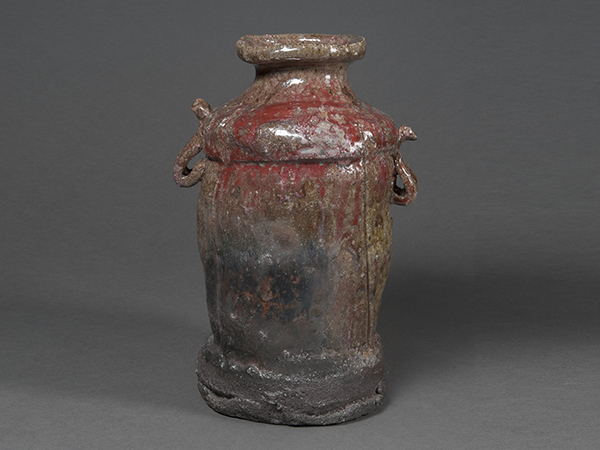
| Author name | Sajirou Tanaka |
| Work name | Karatsu cinnabar glaze vase |
| price | [Sold] ¥472,500 |
| size | W17.7×D14.7×H26.7(㎝) |
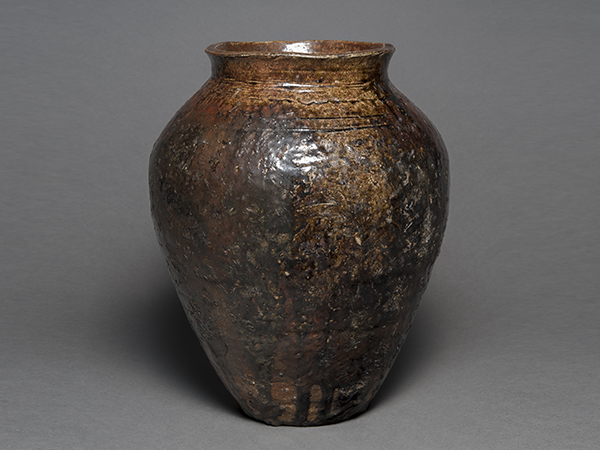
| Author name | Kai Yoshino |
| Work name | Black amber Karatsu hammered flower vase |
| price | 157,500 yen |
| size | φ26.0×H31.5(㎝) |
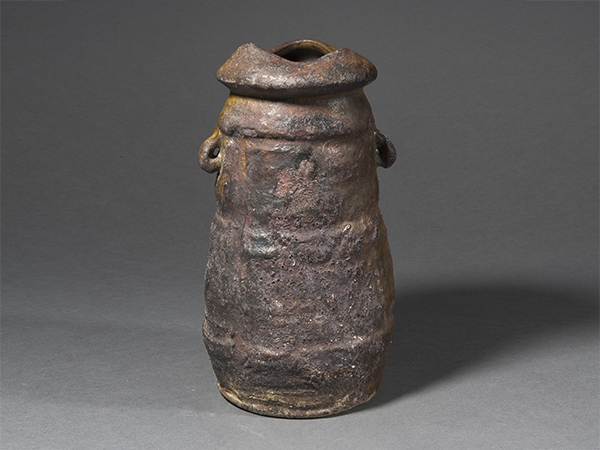
| Author name | Kiyomi Kawakami |
| Work name | Black Karatsu Flower Vase |
| price | 210,000 yen |
| size | W18.8×D12.6×H23.3(㎝) |
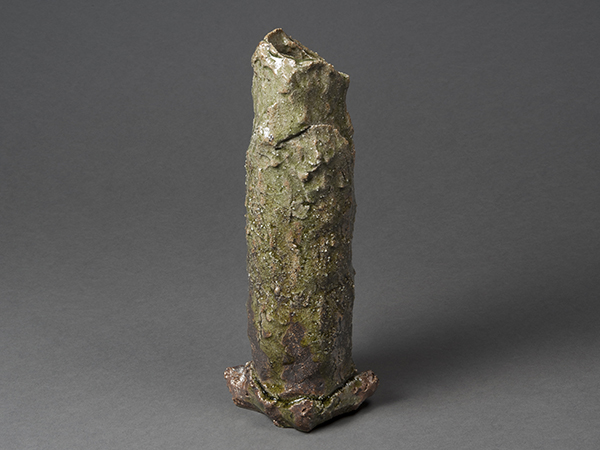
| Author name | Setsuo Hamazaki |
| Work name | Blue Karatsu ware vase |
| price | 73,500 yen |
| size | W11.6×D17.8×H18.5(㎝) |

| Author name | Chiharu Kumamoto |
| Work name | Silver-glazed inlaid square vase |
| price | 210,000 yen |
| size | W22.6×D21.7×H36.2(㎝) |

| Author name | Dohei Fujinoki |
| Work name | Korean Karatsu ware vase with carved tortoise shell pattern |
| price | [Sold] 105,000 yen |
| size | φ13.0×H19.2(㎝) |
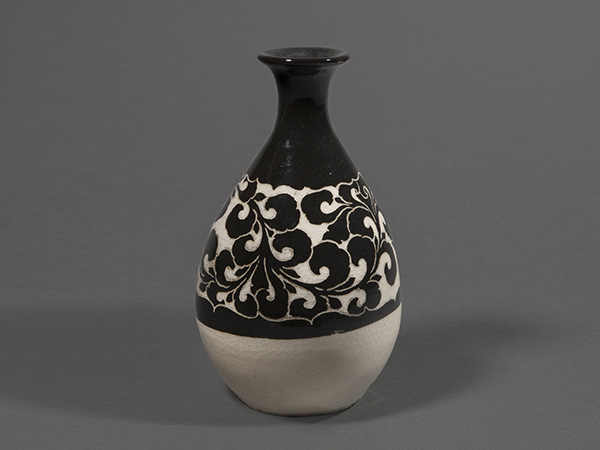
| Author name | 14th Tarouemon Nakazato |
| Work name | Karatsu white ware bottle with black scratched finish |
| price | 420,000 yen |
| size | φ10.2×H17.4(㎝) |
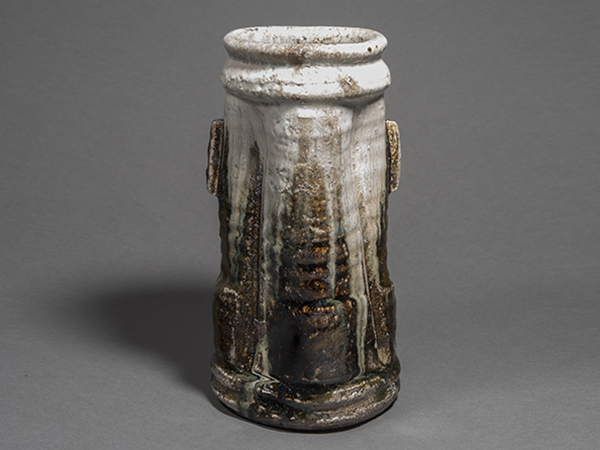
| Author name | Sakurei Okamoto |
| Work name | Korean Karatsu Triangular Flower Vase |
| price | [Sold] 126,000 yen |
| size | W12.4×D12.2×H23.5(㎝) |
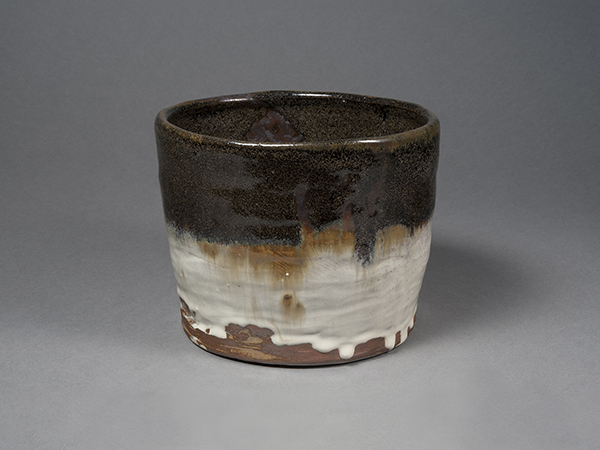
| Author name | Yasumoto Kajiwara |
| Work name | Korean Karatsu flower vase |
| price | 189,000 yen |
| size | W19.8×D18.2×H15.6(㎝) |

| Author name | Naoki Kojima |
| Work name | Karatsu Yamase Flower Vase |
| price | [Sold] 63,000 yen |
| size | φ12.0×H18.0(㎝) |
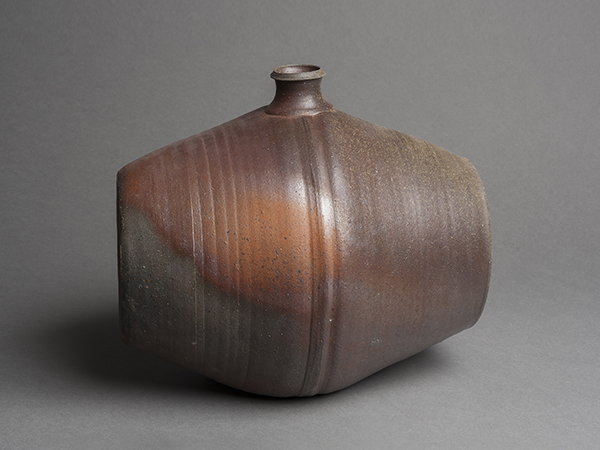
| Author name | Taki Nakazato |
| Work name | Karatsu Nanban style rice bale pot |
| price | 210,000 yen |
| size | W27.5×D22.7×H24.0(㎝) |
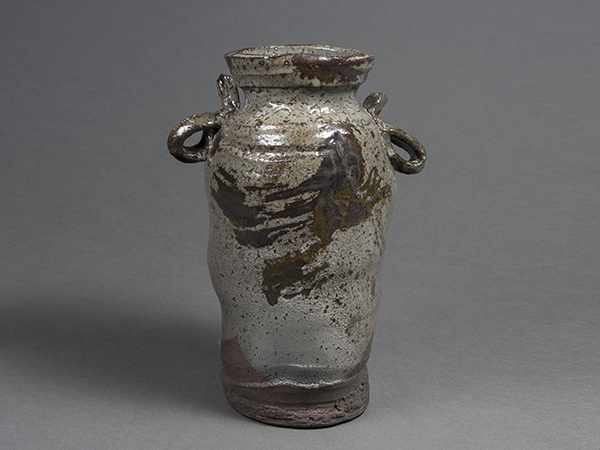
| Author name | Raizan Yasunaga |
| Work name | Painted Karatsu flower vase |
| price | 73,500 yen |
| size | W15.8×D12.0×H22.6(㎝) |
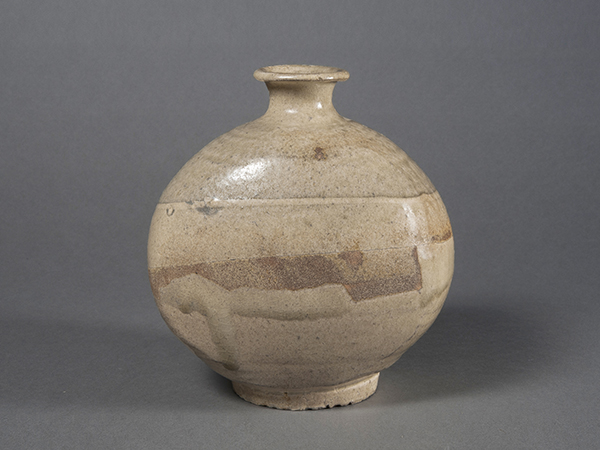
| Author name | Masahiro Takehana |
| Work name | Powdered flat jar |
| price | [Sold] 31,500 yen |
| size | W17.0×D13.5×H18.2(㎝) |
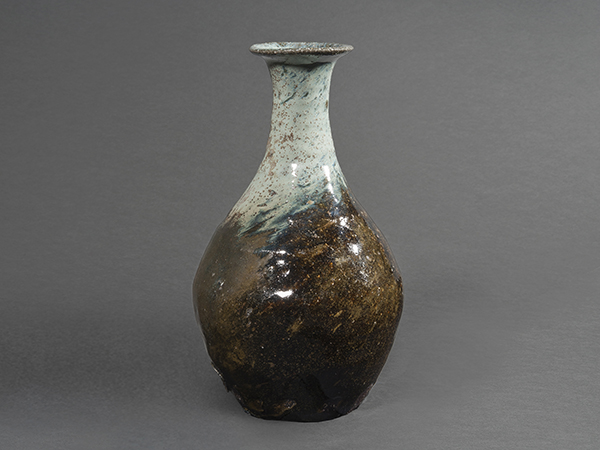
| Author name | Naoto Yano |
| Work name | Korean Karatsu flower vase |
| price | [Sold] 84,000 yen |
| size | φ14.6×H24.8(㎝) |
Regarding sales methods
- ・
- DMWe accept advance reservations for the works displayed on this website before the exhibition begins. We will contact you approximately 20 days before the first day of the exhibition.DMWe ship the items and upload information to this website at almost the same time.
- ・
- For those who are unable to visit our gallery in person, we are happy to accept orders by phone or email.
- ・
- We look forward to receiving your inquiries.